How to infuse green tea properly
Green tea rewards precision. A few degrees of water temperature, an extra 30 seconds in the pot, a little more or less leaf – each of these small shifts can reshape the cup completely, from harsh and bitter to silky and naturally sweet.
This guide is for tea drinkers stepping up from bags to loose‑leaf green tea, who want to avoid bitterness, unlock umami and sweetness, and feel confident that they are handling the leaves well. There is no single rule for all green teas; different styles respond to different approaches, and the same leaves can give you several distinct infusions if you know how to coax them.
By the end, you’ll have a clear, reliable method for preparing loose‑leaf green tea at home, along with specific ranges for different types and examples from JING’s collection.
Why technique matters when you infuse green tea
Among the major tea categories, green tea is the most sensitive. Because the leaves are only minimally oxidised, many of their freshest compounds remain intact – and those same compounds are easily damaged by excess heat or time.
Three variables decide almost everything:
- Water temperature – too hot and the infusion rushes towards bitterness; just right and you get sweetness, umami and clarity.
- Infusion time – seconds can make the difference between delicate and astringent.
- Leaf‑to‑water ratio – too little leaf and you end up with a thin, uninteresting cup; too much and it can feel heavy or over‑intense.
Behind the experience is simple chemistry. Catechins and tannins – responsible for structure and a certain drying sensation – release quickly in very hot water and during long infusions. Amino acids such as L‑theanine, which give green tea its sweet, savoury depth, release more readily at slightly lower temperatures. Managing your technique is essentially a way of choosing which compounds you want to emphasise.
Of course, no amount of precision can transform poor leaf into something extraordinary. JING’s commitment to responsibly sourced green teas – from gardens where altitude, picking standard and craftsmanship all support quality – means you start with leaves that deserve that care.
What temperature should water be for green tea?
For most green teas, a working range of 70–80°C is ideal. Within that:
- Very delicate Japanese styles such as gyokuro and shincha are happiest around 60–70°C.
- Many Chinese green teas perform beautifully around 75–80°C.
- A few robust greens can cope with up to 80–85°C, but this should be approached with awareness.
Using water straight off the boil is the most common mistake. It scalds the leaves, strips tannins aggressively, and flattens the subtle sweetness that makes green tea so compelling. If you don’t have a temperature‑controlled kettle, simply let freshly boiled water stand for 2–3 minutes, or decant it into a separate vessel to lower the temperature more quickly before you infuse.
What temperature should water be for green tea (H3 per brief – time section)
Alongside temperature, infusion time is your other main control. As a starting point:
- 1–3 minutes for the first infusion, depending on the tea and your taste.
Smaller, tightly rolled leaves – like a Mao Feng style such as Organic Jade Sword – tend to release flavour relatively quickly once they open. Larger, flatter leaves such as Long Jing (Dragon Well) take a little longer to unfurl and share their character.
The habit to avoid is leaving the leaves sitting indefinitely in the cup or pot. Green tea over‑steeps quickly; once all the desirable flavours are in the water, extra time mostly adds astringency.
How long to infuse green tea by leaf type
Different green teas respond best to slightly different parameters. As a guide for 250ml of water:
| Tea | Water temperature | First infusion time | Leaf quantity |
|---|---|---|---|
| Sencha | 70–75°C | 1–2 minutes | 2–3g |
| Gyokuro | 60–65°C | 1–2 minutes (or shorter, more concentrated infusions) | 3–4g |
| Long Jing (Dragon Well) | 75–80°C | 2–3 minutes | 2–3g |
| Jade Sword (Mao Feng style) | 75–80°C | 1½–2 minutes | 2–3g |
| Jasmine Pearls | 75–80°C | 2–3 minutes | 2–3g |
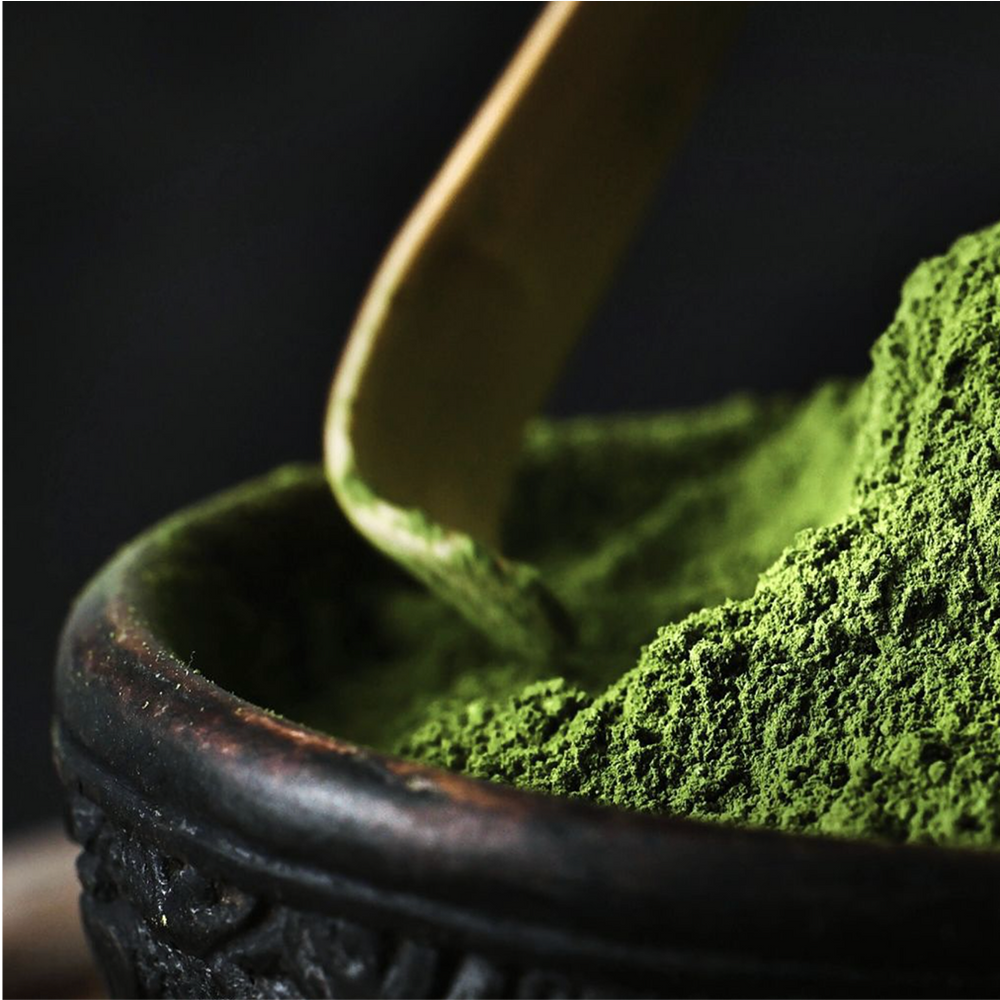
| Matcha | 70–80°C | Whisked, not infused | 1–2g per 60–80ml |
Matcha sits apart because it is powdered tea that you whisk into water rather than infusing and removing. For all other styles, see these numbers as starting points; your ideal cup may sit slightly either side depending on how you like your green tea to feel.
How to infuse green tea step by step
A simple, consistent method will take you a long way with almost any green tea:
- Warm the vessel – Rinse your teapot, gaiwan or mug with hot water, then discard. This helps maintain a stable temperature during the infusion.
- Measure the leaf – Use 2–3g of tea per 250ml of water as a baseline. A heaped teaspoon is a reasonable approximation; a small scale is more precise.
- Heat the water – Bring fresh water to the boil, then allow it to cool to the desired temperature (usually 70–80°C) by waiting a couple of minutes or decanting.
- Add water to leaf – Place the leaves in your warmed vessel and pour the hot water over them evenly.
- Time the infusion – Start with 1–3 minutes, depending on the tea and your preferences.
- Decant completely – Once the time is up, pour all the liquor into your cup or a jug. Do not leave the leaves sitting in a pool of water; this over‑extracts and dulls the next infusion.
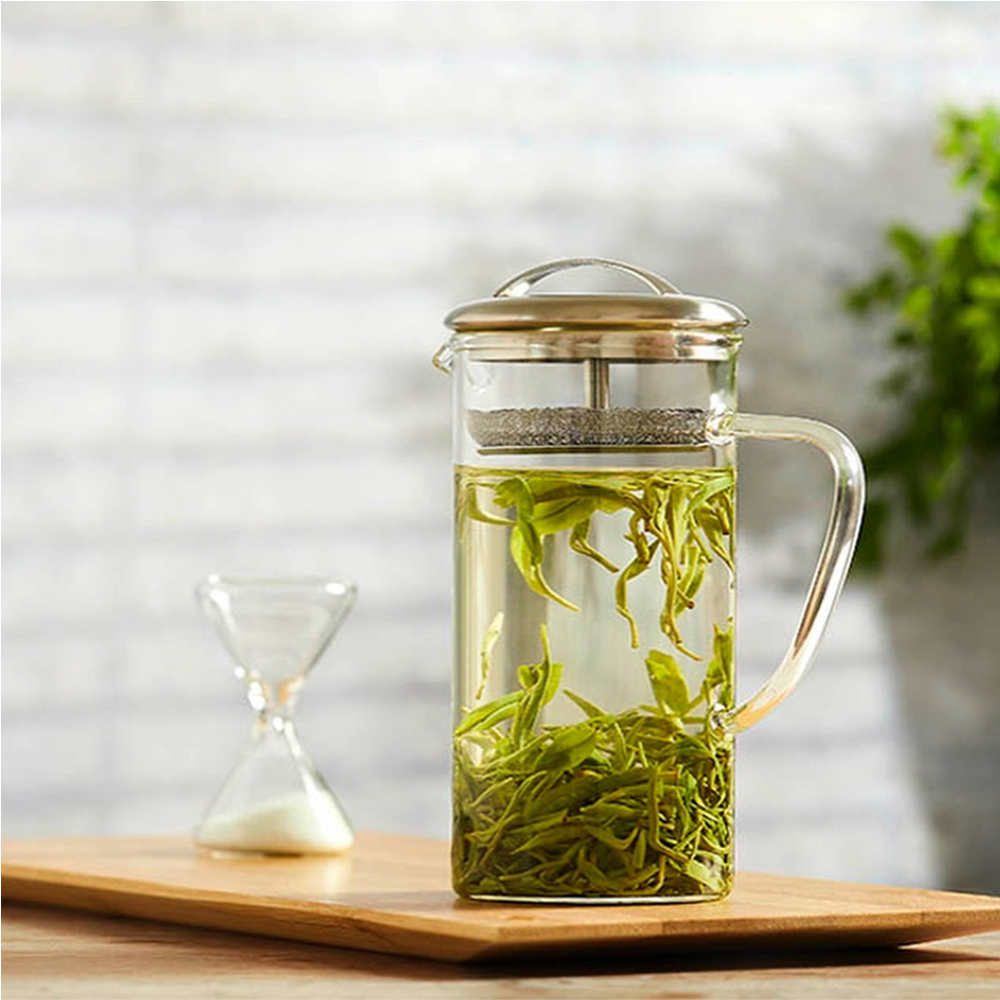
Equipment can be as simple as a glass teapot, a porcelain gaiwan or an infuser basket in your favourite mug. What matters far more than the vessel is how you handle water, leaf and time.
How much loose leaf green tea per cup
As a rule of thumb, 2–3g of leaf per 250ml of water is a good starting point. That’s roughly one heaped teaspoon of many standard greens, but leaf shape matters:
- Light, fluffy leaves occupy more space for the same weight.
- Dense, tightly rolled leaves look smaller in the spoon but may be heavier.
A small kitchen scale removes the guesswork and helps you develop a feel for what different amounts look like. If you like a more intense cup, it is usually better to increase leaf slightly rather than stretching infusion time far beyond three minutes.
Common mistakes when infusing green tea
Most disappointing green tea can be traced back to a few familiar missteps:
- Using water that is too hot – boiling water is almost always too aggressive.
- Over‑steeping – leaving the first infusion much beyond 3 minutes tends to pull bitterness.
- Using too little leaf and compensating with time – this gives a thin yet harsh cup, with tannins dominating but no depth.
- Reusing leaves that have sat wet for hours – once infused, leaves start to oxidise and lose freshness quickly.
- Poor storage between sessions – exposure to light, air and moisture will fade aromatics and flatten flavour.
Addressing just temperature and time is often enough to transform your experience.
Re-infusing green tea: getting more from every leaf
Good loose‑leaf green tea is not designed to give you a single cup and then be thrown away. Many of the finest examples are at their most expressive on the second or even third infusion, as the leaves fully open and the flavours come into balance.
A common pattern looks like this:
- First infusion – bright and fresh, with vivid top notes and a sense of energy.
- Second infusion – often the sweetest and most rounded, where umami, sweetness and aroma meet.
- Third infusion and beyond – softer, more mineral or vegetal, sometimes with gentle nuttiness and a very clean finish.
Organic Jade Sword is a perfect example. This tightly rolled green opens gradually over three or four infusions, moving from a first cup full of springlike freshness to a second with more sweetness and depth, and a third that feels calming and subtle.
How many times can you infuse green tea
Most high‑quality green teas will give 2–4 infusions comfortably. As a simple rule:
- Keep the water temperature consistent across infusions.
- Increase the infusion time by 15–30 seconds each round to allow for the leaves releasing flavour more slowly as they soften.
Avoid reheating water to a rolling boil between rounds; maintaining the same gentle temperature will keep the structure of the tea harmonious.
How does flavour change across infusions
Part of the joy of re‑infusing is watching how the leaf’s character shifts:
- The first infusion tends to highlight freshness: grassy, marine or lightly floral notes leap out, with a lively feel on the palate.
- The second infusion usually offers peak harmony, where sweetness, umami and aroma feel in balance. Many tea drinkers consider this the “best” cup.
- Later infusions become softer and calmer. Edges smooth out; mineral, nutty or lightly vegetal notes become more apparent, and the aftertaste can feel longer and more cooling.
Rather than seeing later rounds as weaker versions of the first, think of each infusion as a different perspective on the same leaf.
Loose leaf green tea vs tea bag green tea
Tea bags have their place. They are quick, portable and familiar. For many people, they are how the habit of tea drinking begins. But there are reasons why loose‑leaf green tea offers a noticeably different experience.
Standard tea bags are often filled with small particles – dust and fannings – rather than whole leaves. This increases surface area, so extraction is fast, but it also means tannins and more bitter compounds flood the cup quickly. There is little room for the leaf to unfurl; flavours are straightforward and can tip towards flat or harsh.
Loose‑leaf green tea gives you whole or large leaves that have space to expand. This allows a more measured extraction, with aromatic compounds and subtle sweetness coming through clearly, and structure building gently rather than all at once. It also invites multiple infusions, which is difficult to achieve pleasantly with tiny leaf fragments.
Not all bags are equal. JING’s approach is to put the same quality leaf used in our tins into our bags, so that convenience doesn’t have to mean compromise.
Why are pyramid tea bags superior
When you choose JING’s whole‑leaf pyramid bags, you’re choosing form that supports flavour:
- The leaf inside is whole, not a separate, lower‑grade cut.
- The pyramid shape gives the leaves room to expand and circulate, much as they would in a teapot, allowing a more complete and even infusion.
- Single‑origin, carefully sourced teas still sit at the core of the experience, so provenance and craft carry through even when time is short.
In other words, you get the practicality of a bag with a cup that still tells a clear story of where the tea comes from.
When to choose loose leaf and when to choose tea bags
Think of loose leaf and tea bags as complementary rather than competing:
- Loose leaf shines at home or anywhere you have space and a little time – a quiet morning, an afternoon pause, a dinner table where a pot can be shared and re‑infused. It gives you maximum control and depth.
- JING’s whole‑leaf bags come into their own when you are travelling, at the office, in a hotel room, or any moment when you want something excellent but simple – just a kettle, a cup and a few minutes.
Both deserve a place in a green tea drinker’s routine; the right choice is simply the one that fits the moment.
Shop green tea worth infusing
Once you understand how water, leaf and time interact, the next step is to choose leaves that reward that care. JING’s green tea collection brings together single‑garden and carefully blended teas that show the breadth of what green tea can be.
Organic Jade Sword offers succulent, sweet, grassy notes that unfold beautifully over multiple infusions. Other Chinese greens in the collection highlight nutty, springlike character or deeper umami. Each is responsibly sourced from gardens where producers are supported to farm and craft at a high level.
These are teas you can infuse, re‑infuse and enjoy across several cups, each one telling you a little more about the place it came from.
Frequently Asked Questions
What temperature should water be for green tea?
For most green teas, water between 70–80°C is ideal. Very delicate Japanese styles prefer the lower end of that range, while many Chinese greens can handle slightly warmer. Using water that is just off the boil without cooling it first is the quickest way to end up with a bitter, astringent cup.
How long should you infuse green tea for?
As a general rule, 1–3 minutes is right for the first infusion. Lighter, delicate leaves often shine at the shorter end; denser or larger leaves may benefit from a little longer. It’s better to start short and taste, then extend next time, than to leave the leaves too long and find the cup dominated by tannin.
Can you infuse green tea more than once?
Yes. Most quality loose‑leaf green teas will give 2–4 enjoyable infusions. Often the second is the most balanced and sweet, with later cups becoming softer and more mineral. Simply pour off the liquor completely each time, keep water temperature consistent, and add 15–30 seconds with each new infusion.
Why does my green tea taste bitter?
Three usual suspects: water that is too hot, an infusion that has gone on too long, or low‑quality leaf that leans heavily on tannins and lacks natural sweetness. Adjusting temperature and time with a good green tea is usually enough to reveal a much more harmonious flavour.
Is it better to infuse green tea hot or cold?
Both have their place. Hot infusions reveal the full spectrum of aroma, umami and warmth that green tea can offer. Cold infusions – where leaves sit in cool water in the fridge for several hours – highlight sweetness and smoothness, with less bitterness and a very refreshing character. It’s worth trying both to see which suits your mood and season.