Everything You Need to Know About Indian Tea
From the deep, comforting malt of a breakfast blend to the fragrant steam of a roadside chai, Indian tea has shaped how much of the world understands and drinks tea. It is one of the great tea origins: vast, varied and capable of producing leaves that range from bold and bracing to ethereal and perfumed.
Yet for many, “Indian tea” still means a single idea – a strong black tea in a mug, often taken with milk. Behind that familiar image lies a far more nuanced landscape of regions, elevations, harvests and styles.
This guide is designed to open that world up. We will explore what Indian tea is, the main regions and types, how geography and terroir influence flavour, and how to choose and infuse Indian teas so that they show you their best side. Whether you are just discovering loose leaf or already exploring origin‑led teas, India has something remarkable to offer your cup.
What is Indian Tea?
Indian tea is tea grown across India’s major tea‑producing regions, most notably Assam in the north‑east, Darjeeling in the eastern Himalayas and Nilgiri in the south. The majority of these teas are made from Camellia sinensis var. assamica, a broad‑leafed variety of the tea plant that thrives in the country’s hotter, more humid conditions.
India is one of the world’s largest tea producers and exporters. Its teas underpin many of the breakfast blends that have become daily rituals in the UK and beyond, and its chai culture has introduced millions to the idea of tea as a fragrant, spiced, milky drink.
Yet even within India, styles of tea vary dramatically. Assam is known for power and richness; Darjeeling for delicacy and layered complexity; Nilgiri for clean, aromatic balance. There are also speciality pockets producing green, white and oolong teas for more niche markets.
Understanding Indian tea means understanding these regions and the flavours they bring, rather than seeing the country as a single, uniform origin.
Types of Indian Tea
Within India, tea is often spoken about by origin as much as by style. Here, we focus on three of the most influential expressions: Assam, Darjeeling and chai.
Indian Assam Tea
Assam is a low‑lying region in north‑east India, split by the wide sweep of the Brahmaputra River and framed by tropical forests. The climate here is hot and humid, with heavy monsoon rains. Tea bushes grow vigorously, producing large, thick leaves that lend themselves naturally to strong black tea.
Assam tea is famous for its malty, rich and robust character. In the cup it often shows flavours of malted grain, dark honey, baked bread and sometimes a hint of dried fruit. The body is full and satisfying, the colour a deep red‑amber.
Because of this strength, Assam is a natural choice for English Breakfast and other strong everyday blends. It takes milk and sugar easily without losing its presence – in fact, many Assam‑based teas are designed with that in mind.
It’s worth making a crucial distinction: Assam is a tea origin; chai is a preparation style. Many masala chai blends use strong Assam tea as their base, but Assam on its own is not chai. Infused without spices and with care, a pure Assam can be a surprisingly nuanced drink, as satisfying neat as it is with milk.
Indian Darjeeling Tea
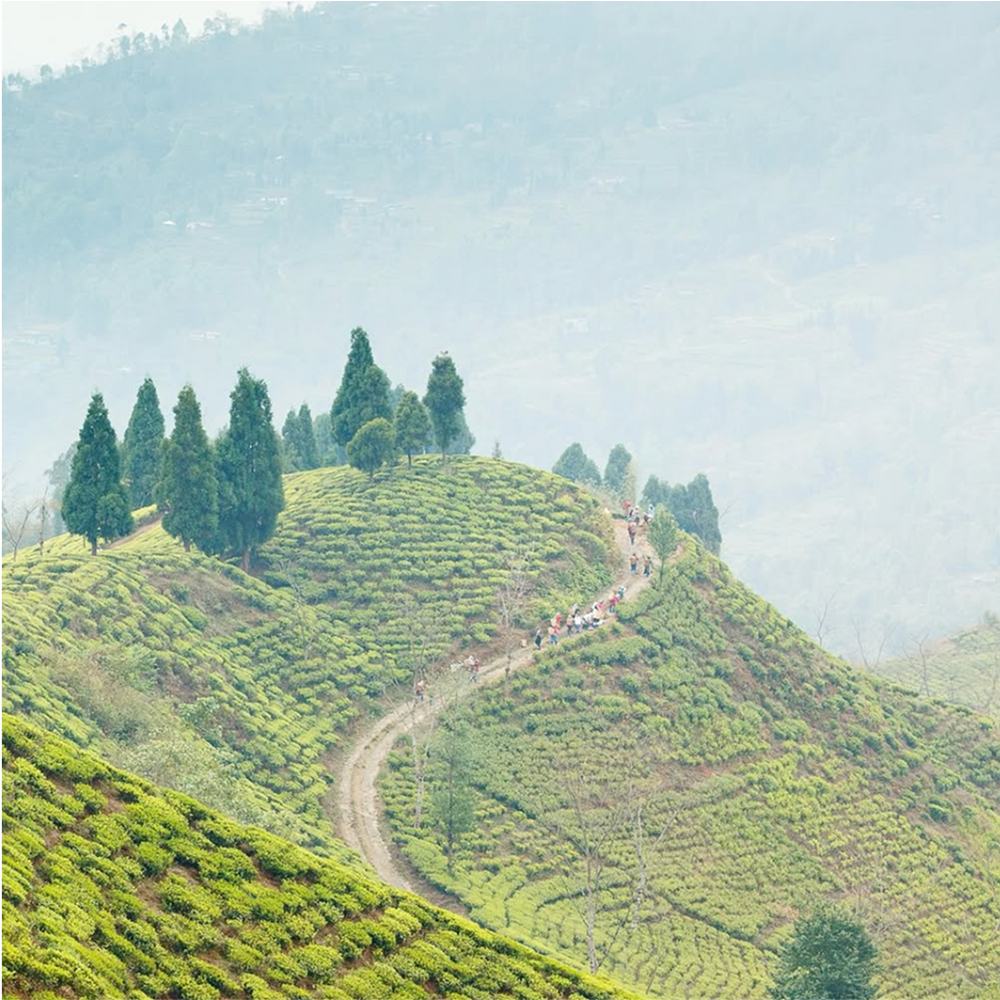
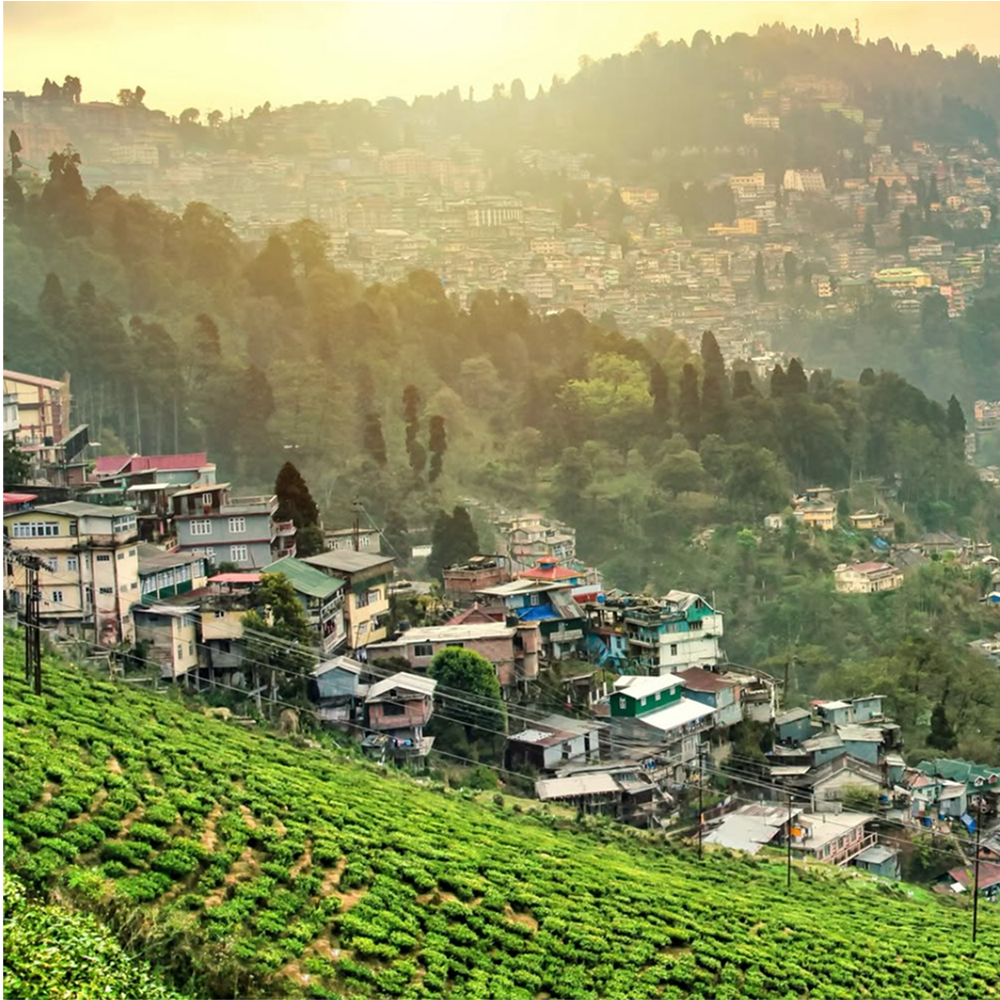
Travel north from the plains of Assam into the foothills of the eastern Himalayas and you reach Darjeeling – a region perched on steep slopes, with gardens that look out towards snow‑capped peaks on clear days. Here, altitude and cooler temperatures change the rules completely.
Darjeeling tea is often called the “champagne of teas”, and not just for marketing effect. The combination of altitude, unique cultivars (including many Chinese varieties), misty conditions and meticulous harvesting produces teas that are lighter, more aromatic and more complex than most.
To understand Darjeeling, you have to understand its flushes – the distinct harvest periods that shape the character of the tea:
- First flush (spring): Picked in early spring as the plants wake from winter dormancy, first flush Darjeeling is light, bright and intensely fresh. The liquor is usually a pale gold, with flavours that can suggest green almonds, wildflowers, young stone fruit and fresh cut grass. These teas are delicate and highly prized.
- Second flush (early summer): As temperatures rise, the leaves develop more body and a different spectrum of aromatics. Second flush Darjeeling is fuller, with a deeper amber colour and the famous muscatel character – a grape‑like, fruity, sometimes slightly spicy note reminiscent of dessert wine. Many connoisseurs consider this the quintessential Darjeeling expression.
- Autumn flush (late season, optional): Later in the year, a softer, rounder style appears. Autumnal Darjeelings are often less intense but more comforting, with mellow fruit, gentle florals and a smooth finish.
- Compared to Assam, Darjeeling teas are lighter in body but higher in aromatic complexity. They are usually best enjoyed without milk, which can mask their finer notes. For those who think Indian tea is always strong and dark, a good Darjeeling can be a revelation.
Indian Chai Tea
Outside India, “chai tea” has come to mean a particular kind of drink: spiced, milky, sweet and warming. Within India, “chai” simply means tea. When people talk about “masala chai”, they are referring to spiced tea in particular.
Chai is therefore a preparation style, not a specific type of leaf. The classic version starts with a robust black tea – often Assam, occasionally a strong blend – combined in a pan with water, plenty of milk, sugar and a mixture of spices such as cardamom, ginger, cinnamon, cloves and black pepper. The mixture is brought to a rolling boil and simmered to extract maximum flavour, then strained and served glass by glass or cup by cup.
In India, chai is not a luxury; it is an everyday ritual. It’s drunk at home, on trains, at street stalls, in offices – a shared pause in the day. Each family and vendor has their own spice recipe and preferred strength.
For tea drinkers used to adding a bag to hot water and stepping away, chai can be eye‑opening. It shows tea as a base for cooks and spice‑makers as much as for tasters, and underlines just how versatile Indian black tea can be.
How Terroir Shapes Indian Tea Flavour
The idea of terroir – the interplay of altitude, climate, soil and geography – is as relevant to Indian tea as it is to wine.
In Assam, low altitude, high humidity and rich alluvial soils combine to create vigorous growth. The heat and monsoon rains push the plants to produce large, juicy leaves. When oxidised fully, those leaves yield teas with intense colour and a strong, malty profile. The climate favours volume and strength over delicacy.
In Darjeeling, everything is different. Tea gardens are carved into mountain slopes at altitudes from around 1,000 to over 2,000 metres. Temperatures are cooler, and mists roll in from the surrounding forests. Plants grow more slowly, concentrating flavour and developing a different set of aromatics. The thinner air and cooler nights encourage brightness and a certain tension in the cup; the result is tea that feels almost weightless but carries astonishing detail.
Further south, in Nilgiri, highland gardens experience a milder, often more consistent climate. Nilgiri teas are typically fragrant, clean and balanced – not as headily perfumed as Darjeeling, nor as broodingly malty as Assam, but a poised middle ground that works beautifully as a refined everyday tea.
By paying attention to terroir, you begin to see why Indian teas from different regions taste so distinct, even when they are all technically “black tea”.
How to Choose High Quality Indian Tea
Choosing Indian tea with confidence is largely about looking for origin, leaf and freshness.
- Origin transparency: High‑quality teas are usually sold with clear information about where they come from: not just “Indian black tea” but “Assam second flush” or “Darjeeling first flush from [named estate]”. That detail suggests a direct connection to specific gardens and harvests.
- Loose leaf over dust: Whenever possible, choose loose leaf rather than tea bags filled with tiny particles. Whole or large, well‑twisted leaves are less likely to have been over‑handled and tend to deliver more nuanced flavour and a cleaner cup.
- Harvest timing: For Darjeeling in particular, knowing whether a tea is first or second flush is vital. For Assam, second flush teas are often prized for their balance of richness and sweetness. Reputable merchants will share harvest information; if it’s absent, the tea is more likely to be a generic blend.
Then factor in your personal preferences:
- If you like strong, comforting tea with milk, a good Assam or Assam‑based blend is your ideal starting point.
- If you prefer lighter, aromatic tea without milk, Darjeeling will likely appeal.
- If you enjoy spice and sweetness, you might look for a well‑balanced chai blend or make your own masala chai using Assam as a base.
Remember that quality in Indian tea, as elsewhere, depends on both origin and craftsmanship. A great name on the packet is only meaningful when it’s backed by careful picking and skilful processing.
How to infuse Indian Tea for the Best Flavour
The same tea can taste radically different depending on how you infuse it. A few adjustments tailored to each style can unlock a lot more from your leaves.
Assam Tea
- Use freshly boiled water, close to 100°C.
- Start with an infusion time of 3-4 minutes for loose leaf; taste and adjust depending on whether you prefer more strength or more clarity.
- Assam handles milk and sugar very well. If you add milk, infuse slightly stronger than you would for drinking neat, so that the tea’s character still comes through.
Darjeeling Tea
- Use slightly cooler water, around 90-95°C, especially for first flush teas. Boiling water can push them towards bitterness and flatten their more delicate notes.
- Begin with an infusion time of 2-3 minutes for loose leaf. These teas can become astringent if left too long; it’s better to infuse a little shorter and, if you wish, top up with a second infusion.
- Darjeeling is best enjoyed without milk, to allow its florals, fruit and muscatel notes to show clearly.
Chai
- Combine a strong black tea (often Assam), cold water, milk and your chosen spices in a saucepan.
- Bring the mixture gently to the boil, then simmer for several minutes, allowing the flavours to deepen and the colour to turn a rich tan.
- Add sugar to taste, strain and serve hot. The result should be thick, aromatic and satisfyingly warming – almost a dessert in itself.
- In all cases, using good‑quality loose leaf Indian tea rewards you with more control and a wider range of flavours to explore. A small change in time or temperature can take you from a merely good cup to a memorable one.
Shop Premium Indian Teas
JING are on a mission to revolutionise the world of tea – away from the dull, tasteless and commoditised teas that fill our supermarkets, to single garden teas of such purity and clarity that they wow the senses. Indian teas sit right at the heart of that mission.
We work with producers in Assam and Darjeeling who share our commitment to provenance and craft, selecting batches that show each region’s character at its best: malty, energising Assam teas that anchor the morning; precise, aromatic Darjeelings that reward quiet attention; and carefully balanced blends that make for exceptional chai.
If you are just beginning to explore Indian tea beyond the supermarket shelf, start by tasting an Assam and a Darjeeling side by side. Notice how the body, aroma and structure differ, even though both are black teas from the same country. From there you can follow your curiosity: deeper into particular estates, into seasonal flushes, or into the world of chai and its countless spice variations.
Each cup is an invitation to taste not just a style, but a place – from the steamy plains of Assam to the cool slopes of the Himalayas. Let the leaves lead, and they will show you why Indian tea has earned its place at the centre of the world’s tea story.