Tea Strainer vs. Tea Infuser: What's the Difference?
Walk into any conversation about loose leaf tea and you will hear the words tea strainer and tea infuser used as though they mean the same thing. They do not. Each does a genuinely different job, at a different point in the infusing process, and knowing which is which changes how good your tea actually tastes. This guide sets out the real difference, when each one earns its place, and which to choose if you only want to buy one. For anyone shopping for their first proper tea infuser, it is worth understanding both before you spend a penny.
What's the Actual Difference?
A tea strainer is a small mesh tool that rests across the rim of a cup or teapot. The leaves are left to infuse freely in the water, with nothing holding them back, and the strainer's only job comes at the very end, catching the leaves as the tea is poured so they stay out of your cup.
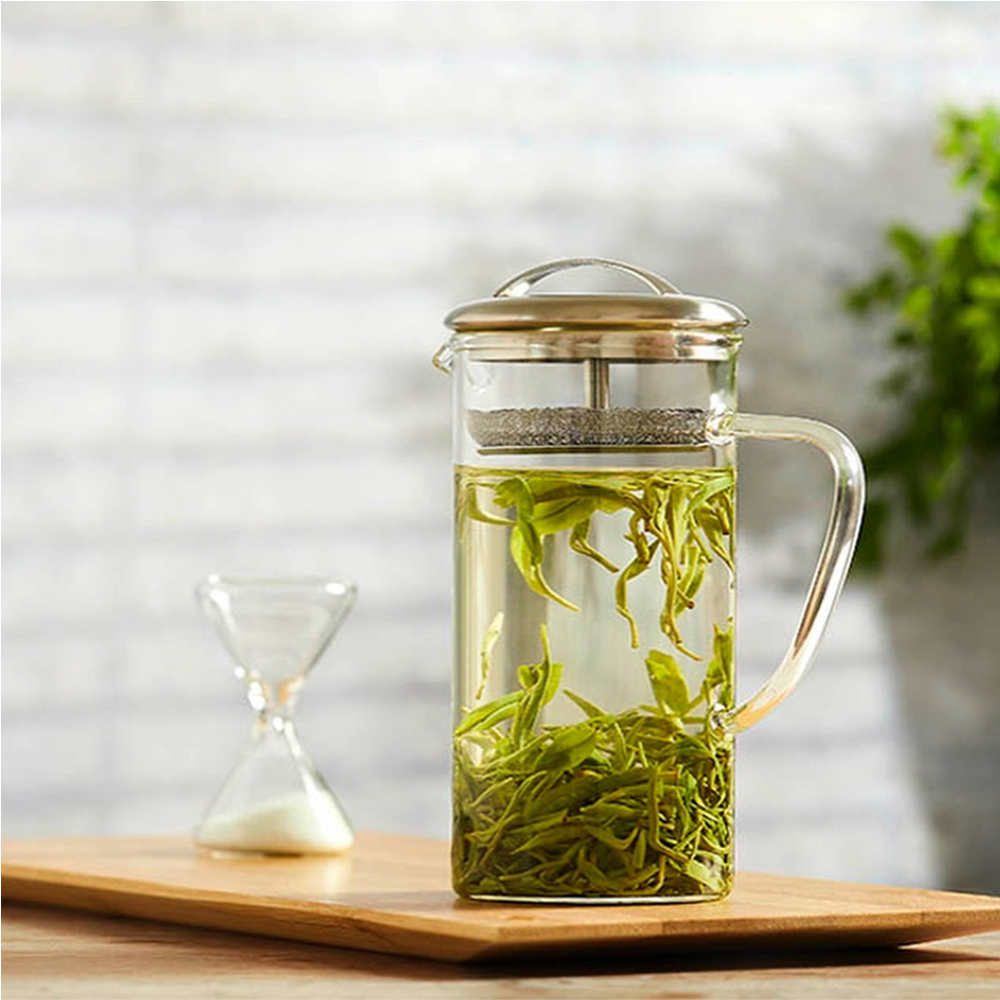
A tea infuser works the other way round. It is a perforated container, usually a basket, ball or built-in filter, that holds the leaves in the water for the whole infusion. Because the leaves never touch the liquid unfiltered, you simply lift the infuser out once the steeping time is up, rather than pouring the tea through anything.
The distinction, in one line, is timing. A strainer works after infusing. An infuser works during it. That single difference decides which one suits how you actually drink tea, something covered in more detail in our guide to how to use a tea infuser.
When a Tea Strainer Makes More Sense
Letting leaves move freely through a full pot of water gives them the most room possible to unfurl, which is exactly why strainers have stayed popular for large, whole-leaf teas and more traditional ways of infusing. There is no container to restrict the leaf, so the tea develops with nothing standing in its way.
The trade-off is control. Because everything infuses together in one pot, there is no way to stop the steep early without pouring the whole lot out. If you want to pull the tea at exactly the right moment, a strainer will not let you.
Best Suited To
Larger whole-leaf teas that benefit from maximum room to expand, and anyone infusing a full pot for sharing rather than a single cup.
When a Tea Infuser Makes More Sense
An infuser keeps the leaves contained from start to finish, which means steeping stops the moment you lift it out. That makes it the better choice for single cups, and for teas that turn bitter quickly if left too long, green and white teas in particular.
The trade-off here runs the other way. A cramped, tightly packed infuser can restrict how much the leaves expand, which is why size and design matter more with an infuser than they ever do with a strainer. A roomy porcelain tea infuser will treat the leaf far better than a tightly packed metal ball.
Best Suited To
Single cups or smaller pots, teas that are easy to over-steep, and anyone who wants precise control over exactly when infusing stops.
If You Can Only Choose One
For most people infusing solo or in small quantities, a well-designed infuser covers everything a strainer does, minus the mess of pouring a full pot through a separate tool. The key word is well-designed. A roomy infuser, rather than a tightly packed one, closes most of the gap in leaf expansion that strainers are usually credited with, so you are not really giving anything up by choosing one. A tea infuser for one cup does the job of both tools in a single, simpler step.
Why JING Designs Around Infusers, Not Strainers
JING's own teaware, including the Tea-iere range and the porcelain infuser mug, builds the filter into the vessel itself rather than selling a separate strainer. That single design decision removes the need to choose between the two for everyday infusing. You add the leaves, pour the water, and lift the filter out when the time is right, with nothing else to buy and nothing else to manage.
Shop JING's Tea Infusers, and Skip the Strainer Debate
A strainer and an infuser solve the same basic problem, keeping leaves out of your cup, but they solve it at different points in the process. For most everyday infusing, an infuser is simply the simpler choice. JING's teaware is built with the filter already in place, so there is no separate strainer to buy or manage, just tea, water and the right amount of time. Explore our tea infuser range to find the right fit, or read the complete guide to teaware for everything else worth knowing before you buy.
Explore now.
Frequently Asked Questions
Is a Tea Strainer the Same as a Tea Infuser?
No. A strainer catches leaves after they have infused freely in a pot or cup, while an infuser holds the leaves during infusing so they can be lifted out once steeping is done.
Do You Need Both a Tea Strainer and a Tea Infuser?
Not usually. Most people only need one, and a roomy, well-designed infuser covers everyday infusing for both single cups and small pots without needing a separate strainer.
Which Is Better for Loose Leaf Tea, a Strainer or an Infuser?
Neither is universally better. Strainers suit large, whole-leaf teas infused in full pots, while infusers suit single cups and teas that are easy to over-steep, since they let you stop infusing precisely.
Can a Tea Strainer Be Used With Any Teapot?
Yes. Since it sits separately on the rim of a cup or pot rather than being built into it, a tea strainer works with almost any teapot or cup.
What's the Easiest Tool to Use for a Single Cup of Loose Leaf Tea?
An infuser mug or a small infuser vessel with a built-in filter, since it combines infusing and straining into one step and lifts out cleanly once the tea is ready.