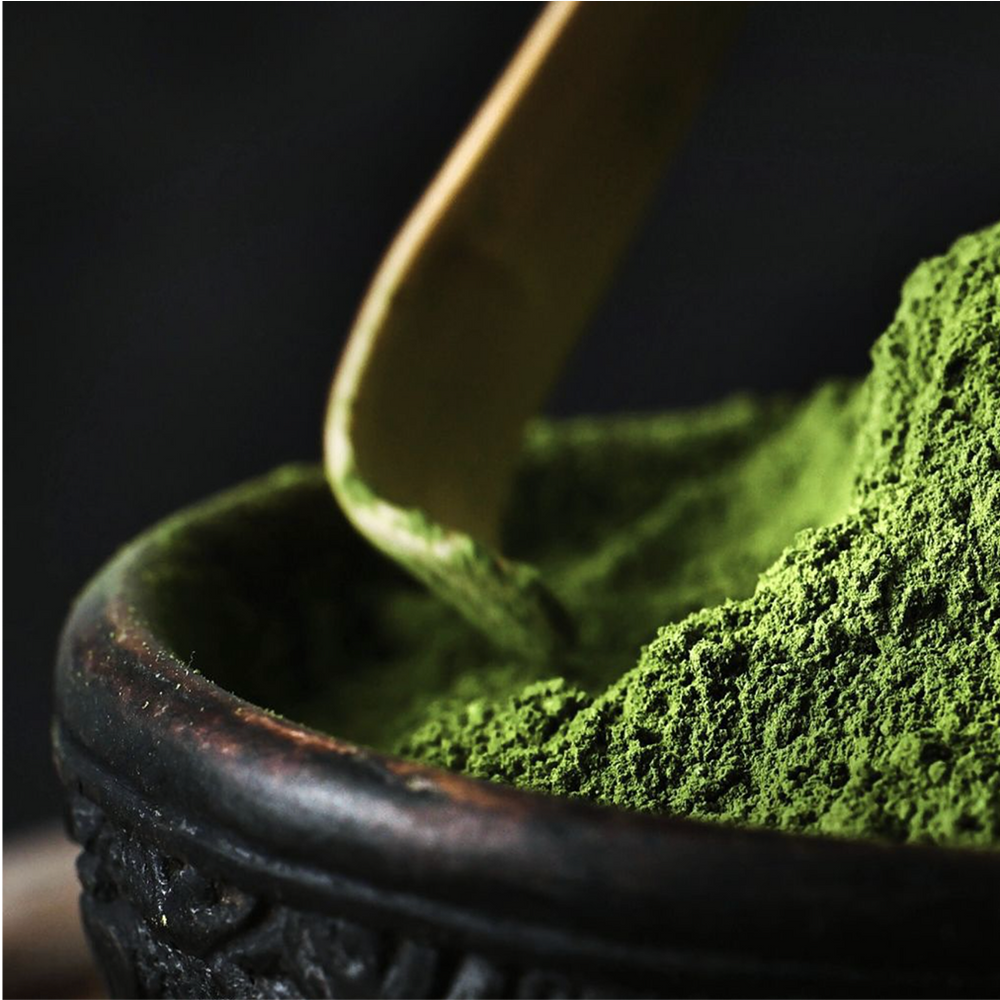
Matcha tea powder is at the heart of Japanese tea culture, a tradition that spans over 1,000 years. This finely ground green matcha powder is more than just a beverage, it's a symbol of mindfulness, health, and a deep connection to nature.
So what is matcha, exactly? Matcha is a type of green tea, but it differs significantly from other varieties. Unlike most teas, which are brewed from whole leaves, matcha powder is made from finely ground leaves, allowing you to consume the entire leaf and all its nutrients. This means matcha can contain up to 10 times more antioxidants than regular green tea. It's also rich in natural plant compounds like catechins, caffeine, and L-theanine, which together create a balanced, energising, and calming effect.
|
What is matcha, in short? Matcha is a Japanese green tea powder made from whole, shade-grown tea leaves that are stone-ground into a fine powder. Because you consume the entire leaf rather than an infusion, matcha delivers more antioxidants, caffeine and L-theanine than a typical cup of green tea. |
What Is Matcha Powder Made Of?
Matcha powder is made from tencha, tea leaves grown specifically for matcha. In the weeks before harvest, the tea bushes are covered with a shade canopy, blocking sunlight and encouraging the leaves to produce more chlorophyll and umami-rich amino acids. This is what gives matcha its vivid green colour and sweet, savoury flavour, rather than the bitterness of an unshaded leaf.
Once picked, the leaves are steamed to stop oxidation and preserve their fresh, green character, then de-stemmed and de-veined so only the softest part of the leaf remains. Finally, the leaves are stone-milled, traditionally over several hours, until they reach an ultra-fine, silky powder. So when you ask what matcha powder is made of, the honest answer is simple: 100% ground tea leaf, nothing added, which is exactly why the quality of that leaf matters so much.
Benefits of Matcha Tea
Green tea is renowned for its numerous health benefits, and matcha is no exception. Here are three key reasons why matcha powder stands out:
-
High in Antioxidants: matcha is rich in catechins, a type of antioxidant that helps protect the body from harmful free radicals, contributing to overall health.
-
Enhances Brain Function: the unique combination of caffeine and L-theanine in matcha not only boosts alertness but also promotes a calm, focused state of mind.
-
Supports Weight Management: some studies suggest that matcha can increase metabolic rate and enhance fat burning, making it a popular choice for those looking to manage their weight.
For a deeper look at the science, see our full guide to the benefits of matcha.
Different Matcha Grades
When it comes to matcha powder, quality matters. The highest quality matcha is known as ceremonial grade, which is traditionally enjoyed on its own in a hot brew as part of the chadō ceremony. Ceremonial grade matcha is made from the best leaves, chosen for their vibrant green colour and intricate, nuanced flavours.
Our JING Organic Matcha Ceremonial Grade is ground to order using traditional stone mills, producing a sweet, creamy matcha with deep umami notes. Sourced from Kagoshima in southern Japan, where fertile volcanic soil enhances the tea's character, our matcha is packed immediately after milling to preserve its freshness and flavour.
For those who prefer to enjoy matcha in different ways, such as in lattes, smoothies, or baking, culinary grade matcha offers a more affordable option. It has a stronger, less subtle flavour designed to hold its own when mixed with other ingredients. Read our ceremonial vs culinary matcha guide to find the right grade for you.
How to Make the Perfect Cup of Matcha
For our Organic Matcha Ceremonial Grade, we recommend using 1.5g (or 1 tsp) of green matcha powder per 160ml cup.
To avoid bitterness, it's important not to use boiling water. Instead, heat the water to around 70ºC. Once you have your matcha and water ready, whisk them together with a bamboo whisk until you create a foamy liquid, then pour it into your cup.
For the full step-by-step, including tool recommendations, see our guide to three essential matcha making tools.
Matcha in Modern Recipes
Matcha lattes have gained popularity recently and are now a common sight in coffee shops. Making one at home is easy and versatile, matcha lattes work well with both dairy and non-dairy milk alternatives.
For a cold matcha latte, simply shake 1.5g of matcha powder with 160ml of cold water and ice in a Matcha Shaker. The result is a creamy, refreshing drink that's perfect for any time of day.
Matcha vs. Green Tea Powder: What's the Difference?
While both matcha and green tea powder come from the Camellia sinensis plant, they are not the same.
Matcha is made from tencha leaves, which are shaded before harvesting and then de-stemmed and de-veined before grinding. This process gives matcha its smooth texture and sweet, umami-rich flavour. Green tea powder, on the other hand, is usually made from sencha leaves, which are not shaded and retain more of the leaf's bitterness and astringency.
Matcha is considered higher quality and provides a more refined taste experience, along with greater health benefits due to its higher levels of L-theanine and chlorophyll. Read our full green tea vs matcha comparison for more detail.
Tips for Enhancing Matcha's Flavour
To get the best taste from your matcha powder, always choose a high-quality ceremonial grade powder. Pay attention to your water temperature. Using 70ºC water will bring out matcha's creamy, sweet, and umami-rich flavours without introducing bitterness. Curious exactly what that flavour should taste like? Our matcha taste guide breaks it down in full. You can also experiment with making matcha lattes using milk or non-dairy alternatives, and adjusting the sweetness to your preference.
FAQs: Matcha Powder
What is matcha powder made of?
Matcha powder is 100% ground tea leaf, specifically shade-grown tencha leaves that are steamed, de-stemmed, de-veined and then stone-milled into a fine powder. Nothing else is added.
Is matcha powder the same as green tea powder?
Not quite. Both come from the same plant, but matcha is made from shaded tencha leaves and stone-milled for a smooth, umami-rich flavour, while green tea powder is typically made from unshaded sencha leaves and tastes more bitter and astringent.
Is matcha powder healthy?
Yes, because you consume the whole leaf, matcha delivers significantly more antioxidants, caffeine and L-theanine than brewed green tea. See our benefits of matcha guide for the full picture, including how its caffeine compares to coffee.
Read more on matcha's caffeine content.