The 5 best green teas for beginners
If your previous experience of green tea was a bitter, slightly medicinal cup that put you off the idea entirely, that is almost certainly a preparation problem rather than a tea problem. Green tea that tastes harsh has usually been infused with water that was too hot, left to steep for too long, or was simply not very good leaf to begin with. None of that tells you anything about what green tea actually tastes like when it is made well.
This guide gives you five genuinely easy starting teas, each chosen to cover a different beginner concern, from smooth and naturally sweet to floral and forgiving, with the exact infusing guidance to get it right first time.
For a broader overview of what distinguishes different styles and origins, our guide to types of green tea is a good place to start.
Why green tea can taste bitter (and how to avoid it)
Bitterness in green tea has a specific cause: excess tannins drawn out of the leaf by water that is too hot or an infusion that runs too long. This is worth understanding because it means bitterness is almost always preventable rather than inherent to the tea. The same leaf that produces a harsh, flat cup at 100°C can be genuinely elegant at 75°C with a shorter steep.
The other variable is the leaf itself. Fresher, higher-grade, single-garden leaf has a naturally smoother, sweeter starting point than the blended and often stale leaf inside most supermarket tea bags, which means the margin for error is much larger. A well-sourced loose leaf green tea is considerably more forgiving than the alternative.
The rule that applies to every tea in this list: cooler water, roughly 70 to 80°C, and a short infusion of one to two minutes for a clean, pleasant first cup. If that sounds fussy, it is not. Leaving a freshly boiled kettle to cool for two or three minutes before pouring is all it takes.
The 5 best green teas for beginners
These five are chosen to cover different starting points. Two are Chinese greens, known for their smoothness and natural sweetness. One is a Japanese classic that rewards careful preparation. One is scented rather than pure green, which makes it the easiest possible introduction for anyone nervous about grassiness. And one tastes so unlike a typical green tea that it is often the gateway for people who think they simply do not like the style.
1. Jade Sword
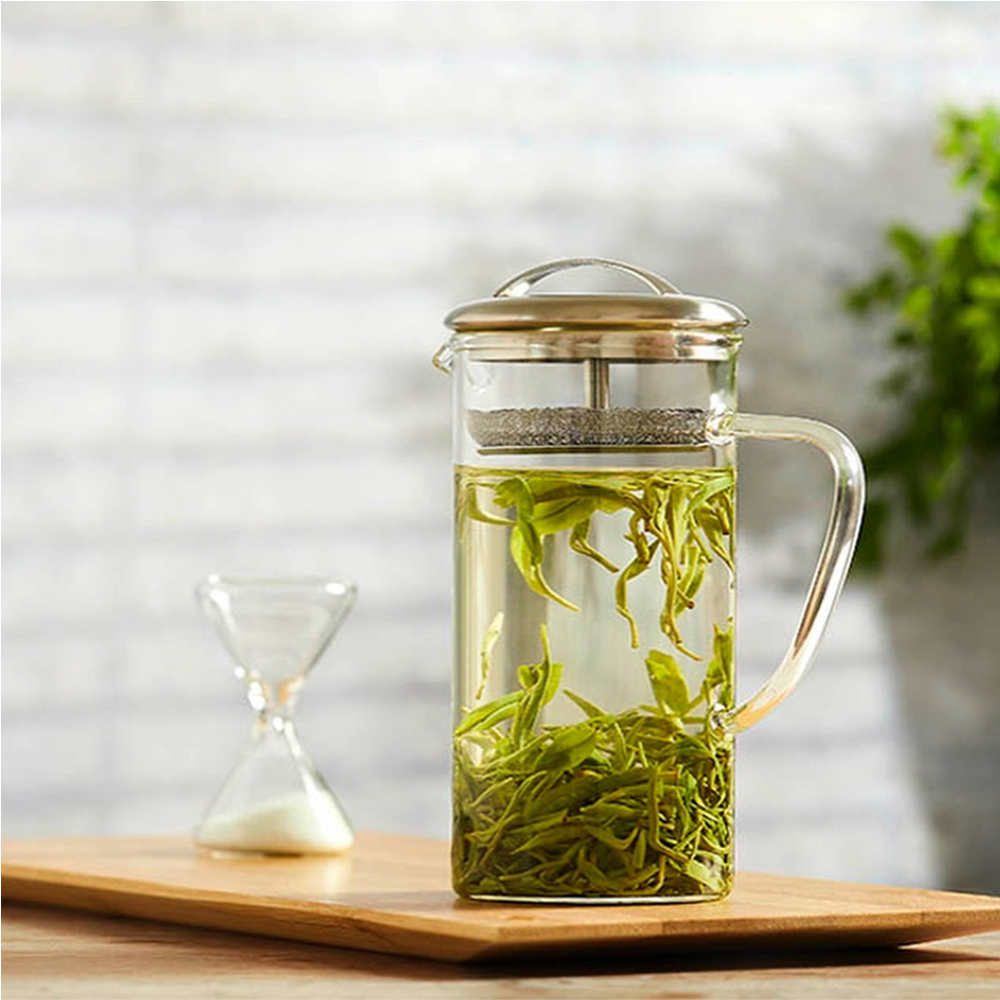
Jade Sword is a Chinese green tea from Zhejiang province, shaped into long flat leaves that unfurl gently as they infuse. It is naturally sweet, very low in bitterness, and produces a pale, clean cup with a mild freshness and a pleasant aftertaste. As a first green tea, it sets a generous standard.
Infuse at around 75°C for 1 to 2 minutes. The lower temperature is key: it keeps the sweetness forward and prevents any of the slight grassiness that would emerge at higher heat.
JING's Jade Sword green tea is organic and sourced from a named garden, which is reflected in the consistency and smoothness of the cup.
2. Dragon Well (Longjing)
Dragon Well is perhaps the most famous Chinese green tea and, when properly made, one of the most approachable. Its flat, pressed leaves produce a mellow, slightly nutty cup with very little astringency and a toasted warmth that makes it feel quite different from any Japanese green tea. It is the textbook green tea: recognisable, considered, and a reliable second cup for anyone who enjoyed Jade Sword and wants to try something with a little more character.
Infuse at around 80°C for 2 minutes.
JING's Dragon Well tea is sourced from the Longjing region of Hangzhou, where this tea has been made for over a thousand years.
3. Sencha
Sencha is the most widely drunk tea in Japan, which means it is where many people encounter Japanese green tea for the first time. Its profile is grassier and fresher than a Chinese green, with a slight marine quality that comes from the Japanese terroir. This grassiness is the thing that divides beginners, but it is almost entirely a preparation issue: over-steeped or over-heated sencha is harsh; properly made sencha at the right temperature is clean and vivid.
Infuse at around 70°C for 1 minute, and no longer. Remove the leaves promptly. That single change resolves most people's objections to Japanese green tea.
JING's Sencha green tea is a good introduction to the Japanese style: fresh, direct, and very different from anything sold in a standard supermarket tea bag.
4. Jasmine Pearls
Jasmine Pearls are hand-rolled balls of green tea that have been scented by layering fresh jasmine blossoms over the leaves repeatedly until the tea absorbs the fragrance. The result is naturally sweet and floral, carrying barely any grassiness at all. For anyone who has tried and disliked pure green tea, Jasmine Pearls are often the discovery that changes things. The jasmine is not a flavouring; it is a traditional scenting process, and the difference in the cup is unmistakable.
Infuse at around 80°C for 2 to 3 minutes. Watch the pearls unfurl as they infuse, which is part of the appeal.
JING's Jasmine Pearls tea uses green tea as the base, scented using the same traditional method applied to Jasmine Silver Needle.
5. Genmaicha
Genmaicha is Japanese green tea blended with roasted rice, which gives it a toasty, nutty, deeply warm character that feels much closer to a familiar comforting drink than most people expect from green tea. Some of the rice pops during roasting, creating small white puffs among the leaves. The roasted rice substantially softens the grassiness of the green tea and adds a wholesome savouriness that makes this the easiest gateway for people who are genuinely sceptical about green tea.
Infuse at around 80°C for 2 minutes.
JING's Genmaicha tea is organic and uses a good ratio of green tea to roasted rice, which keeps the character of both ingredients present rather than letting one overwhelm the other.
How to infuse green tea properly as a beginner
Water temperature is the single most important variable. Never use water straight from a boiling kettle for green tea. Leave it to cool for two to three minutes, or fill the kettle from the cold tap and stop it before it reaches boiling. A thermometer is useful but not necessary: around 70 to 80°C is the target for most of the teas above, and it is easy to reach by feel once you have done it a few times.
Infusing time matters almost as much. Remove the leaves promptly once the time is up rather than leaving them in the water, because the longer the leaves sit, the more tannins extract and the more bitter the cup becomes. A simple loose leaf infuser or a teapot with a strainer is all you need. There is no specialist equipment required.
Good quality loose leaf green tea can typically be re-infused two or three times from the same leaves, with the flavour softening slightly each time. The second infusion is often the most balanced.
What to try next once you have found your favourite
Once you are comfortable with one of these five and understand how green tea responds to temperature and time, the rest of the range opens up naturally. The next step from Jade Sword might be Dragon Well's nuttier complexity. From Sencha, a shade-grown Japanese green like gyokuro offers an entirely different depth. From Jasmine Pearls, the pure version of the base tea tells you how much the scenting is doing.
Explore JING's green tea range to find where your curiosity leads next.
Frequently asked questions
What is the mildest green tea for beginners?
Jade Sword and Jasmine Pearls are both naturally sweet and low in bitterness, making them among the gentlest introductions to green tea. Jade Sword is the mildest of the two in terms of flavour intensity. Jasmine Pearls is the easier choice for anyone who finds pure green tea too grassy, since the jasmine scenting softens much of that character.
Why does my green tea taste bitter?
Bitterness almost always comes from infusing with water that is too hot or leaving the leaves in the water for too long, both of which draw excess tannins out of the leaf. Try cooler water, around 70 to 80°C, and a shorter infusion of one to two minutes. The same leaf that tasted harsh will taste quite different.
What temperature should I use to infuse green tea?
Most green teas taste best infused between 70°C and 80°C, well below boiling, for one to three minutes depending on the tea. Japanese green teas like sencha and gyokuro generally need lower temperatures than Chinese varieties like Dragon Well or Jade Sword.
Is loose leaf green tea better than tea bags for beginners?
Loose leaf tea tends to be fresher and higher grade than most tea bags, which means a smoother, less bitter cup even for a first-time drinker. The leaf has more room to expand during infusing, which also improves extraction. A simple infuser is all you need to get started.
How many times can you infuse green tea leaves?
Good quality loose leaf green tea, including all five teas above, can typically be re-infused two to three times, with the flavour gently softening each time. The second infusion is often the most well-rounded. Extend the infusing time slightly on the second and third infusions to compensate for the slower extraction from already-opened leaves.