
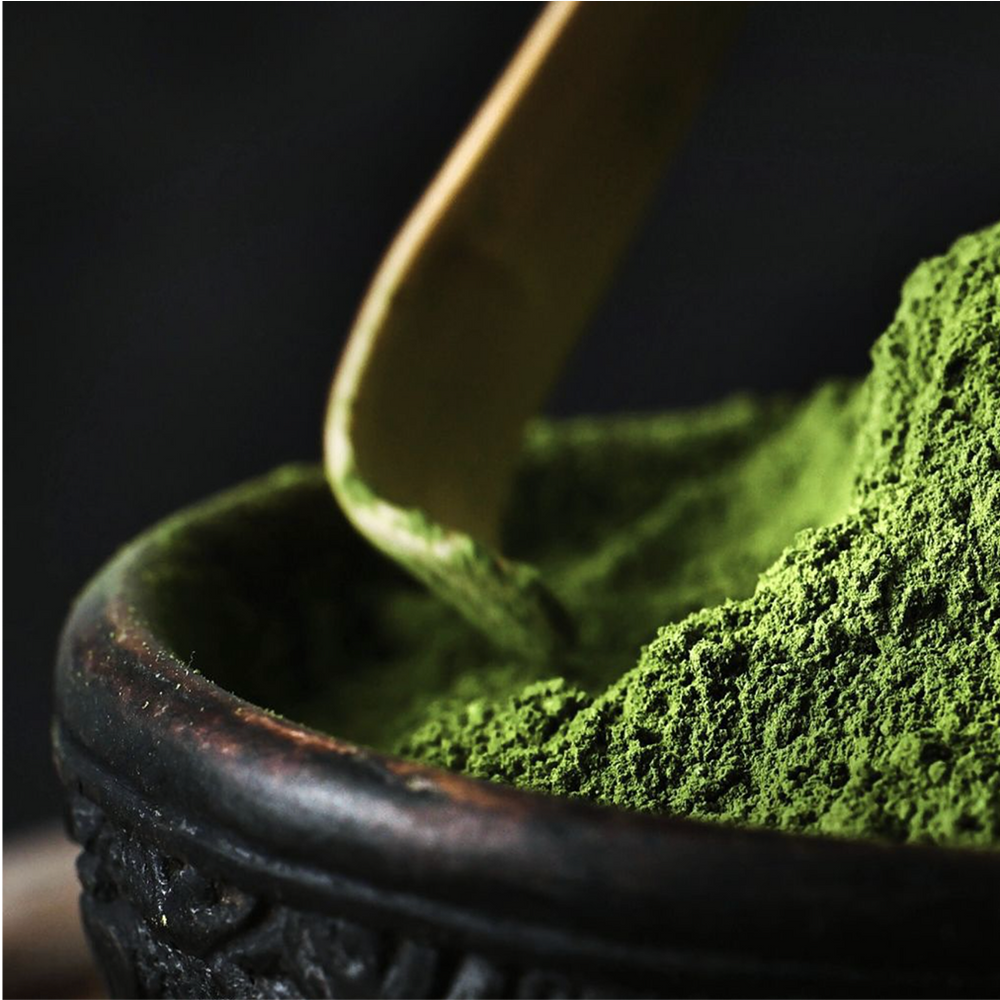
Matcha is one of the most visually striking teas in the world – a vivid green powder that whisks into a frothy, almost luminous bowl. But behind the colour and the ceremony lie a wealth of benefits that have made it a modern staple for many who value both wellbeing and pleasure.
In this guide, we’ll explore ten of the key benefits of matcha – from focus and calm energy to skin and heart health – and explain how they connect back to the way matcha is grown and crafted.
For a taste of what all this care delivers, you can explore our Ceremonial Matcha or our curated matcha tea collection.
Is Matcha Good For You?
Matcha has been revered in Japan for centuries as a drink for monks, poets and warriors – for anyone seeking a calm, sustained clarity. Today, it’s often spoken of as a “superfood”, but the reality is both simpler and more compelling.
Because matcha is:
- Made from shade-grown leaves, richer in chlorophyll and amino acids.
- Consumed whole, not infused and discarded.
- Crafted using gentle, traditional methods that preserve nutrients.
…it offers an unusually concentrated combination of antioxidants, amino acids and gentle caffeine.
When sourced and prepared well, matcha can become one of the most rewarding daily rituals for both body and mind.
The Benefits of Matcha
1. It Can Improve Brain Health
Matcha’s most famous pairing is caffeine + L-theanine.
- Caffeine sharpens alertness and reaction time.
- L-theanine, an amino acid elevated by shade-growing, promotes alpha brain wave activity – associated with calm focus, mental clarity and creative thinking.
Taken together, they can:
- Improve sustained attention.
- Support working memory.
- Help you stay “switched on” without feeling overstimulated.
Drink a bowl of high-grade matcha before a period of deep work or study and you’ll understand why it has long been associated with focused meditation.
2. It Can Help You Relax
Matcha might contain caffeine, but it’s a very different experience from a double espresso.
L-theanine encourages relaxation without drowsiness, smoothing the edges of caffeine’s stimulation. The result is a centred, grounded state – wakeful, but not wired.
Combine this with the act of preparing matcha – measuring, sifting, whisking – and the drink becomes a ritual that breaks up a busy day with a few minutes of deliberate, calming movement.
3. It’s Filled with Antioxidants
Matcha sits near the top of many antioxidant rankings, thanks largely to its abundance of catechins, especially EGCG (epigallocatechin gallate).
These plant compounds:
- Help to neutralise free radicals.
- Support cellular health over the long term.
- Contribute to matcha’s reputation as a protective daily habit rather than a quick fix.
Because you’re consuming the whole leaf, properly grown and carefully ground matcha delivers significantly more antioxidants per cup than a standard green tea infusion.
4. It May Support Weight Management
Matcha is not a miracle solution, but it can be a helpful companion.
Catechins and caffeine have been linked with:
- Slight increases in thermogenesis (the body’s caloric “burn”).
- Enhanced fat oxidation, particularly when combined with exercise.
In practice, that means matcha can support a balanced approach to weight management when paired with movement and nourishing food – a fine-tuning tool rather than the main engine.
5. It Could Improve Heart Health
Green tea catechins, including those in matcha, are associated in studies with:
- Improved cholesterol profiles – particularly reductions in LDL (“bad”) cholesterol.
- Reduced oxidation of LDL, a factor in cardiovascular health.
- Modest reductions in blood pressure over time.
Because matcha is essentially a concentrated form of green tea, regularly drinking a high-quality bowl can be a considered part of a heart-supportive lifestyle.
6. It Helps Keep Your Liver Healthy
Your liver works hard; matcha’s antioxidants can offer support.
Research suggests that green tea catechins may:
- Help protect liver cells from certain forms of damage.
- Support healthy liver enzyme levels when consumed in moderation.
Quality matters here. Very large doses of low-grade powdered teas can risk introducing contaminants or excessive amounts of certain compounds. Choosing a trusted source – such as our carefully sourced Ceremonial Matcha – and drinking it as part of a balanced diet is key.
7. It Can Improve Skin Health
Matcha’s benefits are not confined to the mind and heart; they can be visible on the skin too.
Antioxidants like EGCG:
- Help reduce oxidative stress, a factor in premature skin ageing.
- May support elasticity and firmness over time.
- Can calm some forms of redness and inflammation from within.
Think of a daily bowl of matcha as an internal support for a healthy complexion – not a replacement for good skincare, but a quiet, consistent ally.
8. It Can Help Lower Cholesterol
Regular green tea consumption has long been associated with improved cholesterol levels; matcha simply concentrates that potential.
Catechins may:
- Reduce absorption of cholesterol in the gut.
- Support a healthier balance of LDL and HDL cholesterol.
- Contribute to improved lipid profiles over sustained periods.
Again, it’s the long view that matters. Matcha fits best as part of an overall pattern of thoughtful choices rather than a standalone intervention.
9. It’s Good for Gut Health
Emerging research is beginning to explore matcha’s role in gut health.
There are early indications that:
- Certain tea catechins may act as prebiotics, supporting beneficial gut bacteria.
- Antioxidants can help to calm low-level inflammation in the digestive system.
Paired with a fibre-rich, plant-forward diet, matcha can become one of many subtle ways to nurture a more balanced microbiome.
10. It’s High-Quality – When You Choose Well
Many of matcha’s benefits hinge on quality.
Ceremonial-grade matcha, made from shade-grown, first-harvest leaves and stone-ground with care, tends to:
- Retain more nutrients.
- Contain fewer impurities.
- Offer a smoother, more enjoyable flavour – encouraging you to drink it regularly.
Generic “green powders” or very low-cost matcha alternatives may not be grown or processed with the same attention to detail. At JING, we work directly with producers to ensure our matcha collection reflects the highest standards in both taste and integrity.
Summary
Matcha’s benefits are as layered as its flavour.
When you whisk a bowl of high-grade matcha, you’re inviting in:
- Focused, calm energy.
- A sense of relaxation without drowsiness.
- High levels of protective antioxidants.
- Gentle support for weight management.
- Potential improvements in heart health.
- A helping hand for liver function.
- Internal support for healthy, glowing skin.
- A nudge towards better cholesterol profiles.
- Emerging benefits for your gut.
- The assurance of quality when you choose a trusted, ceremonial-grade tea.
All of this stems from the way matcha is grown, shaded, harvested and milled – and from the way you choose to weave it into your day.
To experience these benefits in their most delicious form, explore our Ceremonial Matcha, delve deeper into what matcha really tastes like, or discover your ideal daily companion in our full JING matcha collection.


Leave A Comment