What is Chinese tea?
When people talk about “Chinese tea”, they are really talking about the origins of tea itself. The first tea plants were discovered, cultivated and transformed into drinkable leaves in China, and for centuries tea masters there have been refining the craft. Today, Chinese tea spans everything from bright spring greens to dark, aged Pu‑erh, yet all of them share a common thread: meticulous processing, deep regional character and a culture that treats tea as an art form rather than a simple habit.
In this guide we’ll explore what Chinese tea actually is, how it’s classified, how many types there are, how to prepare them, what benefits they offer and how to recognise genuine quality – with real examples from JING’s Chinese tea collection. To truly appreciate the regional nuances and centuries‑old traditions behind these leaves, explore our definitive guide to Chinese tea.
A brief history and why Chinese tea matters
The story of tea begins in China with Camellia sinensis, the evergreen shrub whose leaves, handled in different ways, become every “true” tea in the world. Legend places its discovery more than 4,000 years ago; recorded history shows that by the Tang and Song dynasties, tea cultivation and preparation had already become sophisticated arts, with entire treatises devoted to picking, crafting and serving.
One of the most important truths about Chinese tea is also one of the most misunderstood: green, black and oolong teas do not come from different plants. Every true tea comes from the same species, Camellia sinensis. What separates them is not what grows in the ground, but what happens to the leaves once they’re picked.
The defining factor is oxidation – a natural chemical reaction that occurs when enzymes inside the leaf are exposed to oxygen, rather like a sliced apple turning brown. Chinese tea masters have spent centuries learning to guide, encourage or halt this reaction. By controlling how long and how far a leaf oxidises, and how it is shaped and fired along the way, they can draw entirely different colours, aromas and flavours from the same fresh leaves.
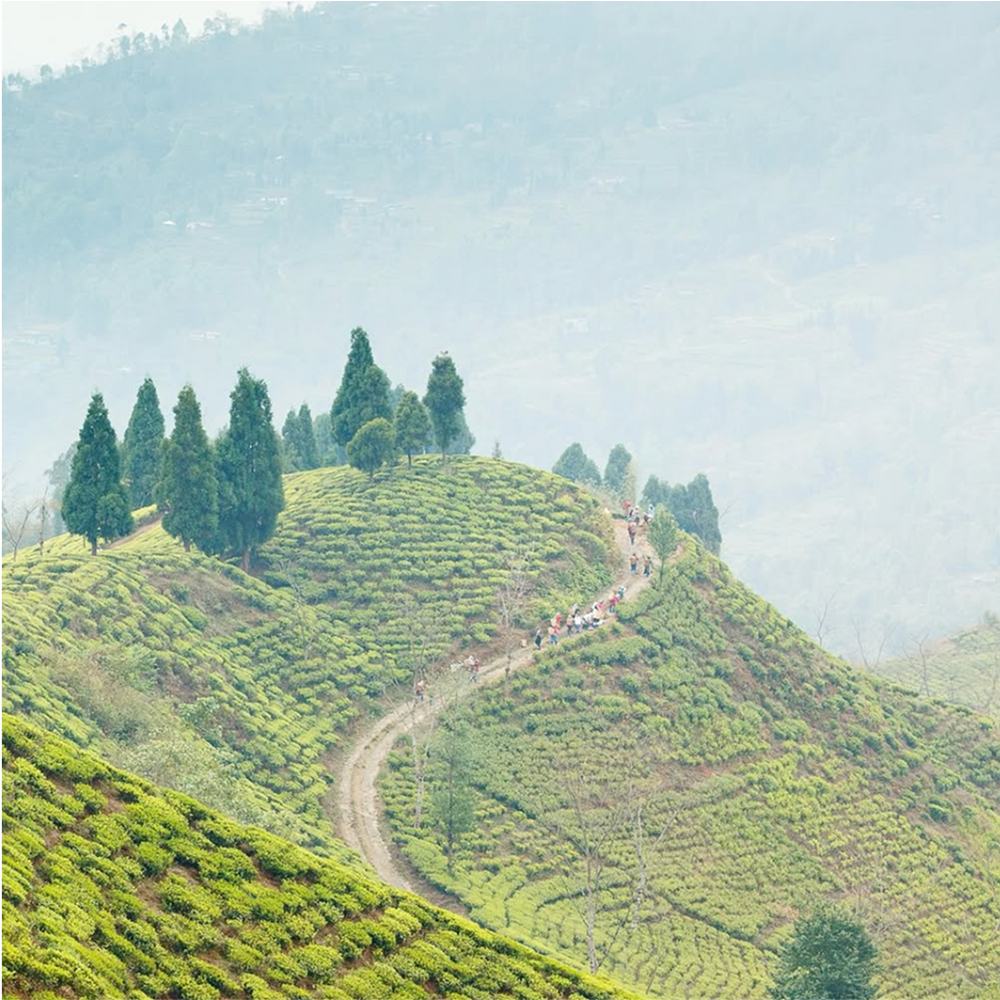
This is where craftsmanship and terroir meet. The same variety of tea plant grown on a high, mist‑covered mountain and on a warm river valley floor will respond differently to handling. Chinese tea matters not only because it is the original; it matters because it shows, more clearly than almost anywhere else, how origin, processing and seasonality can transform a single species of leaf into a whole universe of experiences.
How many types of Chinese tea are there?
Within Chinese tea culture, there are traditionally six main categories of tea. Each sits at a different point along the oxidation spectrum, and each has its own processing style and sensory world:
- Green tea – unoxidised
- White tea – very lightly processed, barely oxidised
- Yellow tea – lightly oxidised with an extra “yellowing” step
- Oolong tea – partially oxidised
- Black tea (hong cha / red tea) – fully oxidised
- Pu‑erh – aged and microbially fermented
The oxidation spectrum is the thread connecting them. At one end, green teas are fixed quickly after picking to keep them bright and verdant. At the other, black teas are allowed to oxidise completely, turning the leaves dark and the liquor deep amber. Between these poles sit the more nuanced categories, where tiny changes in timing and temperature can change everything.
The six types of Chinese tea explained
This is where categories become cups. Below we walk through each of the six types of Chinese tea, how they are processed, how they tend to taste, and how best to infuse them – with JING examples where available.
Green tea
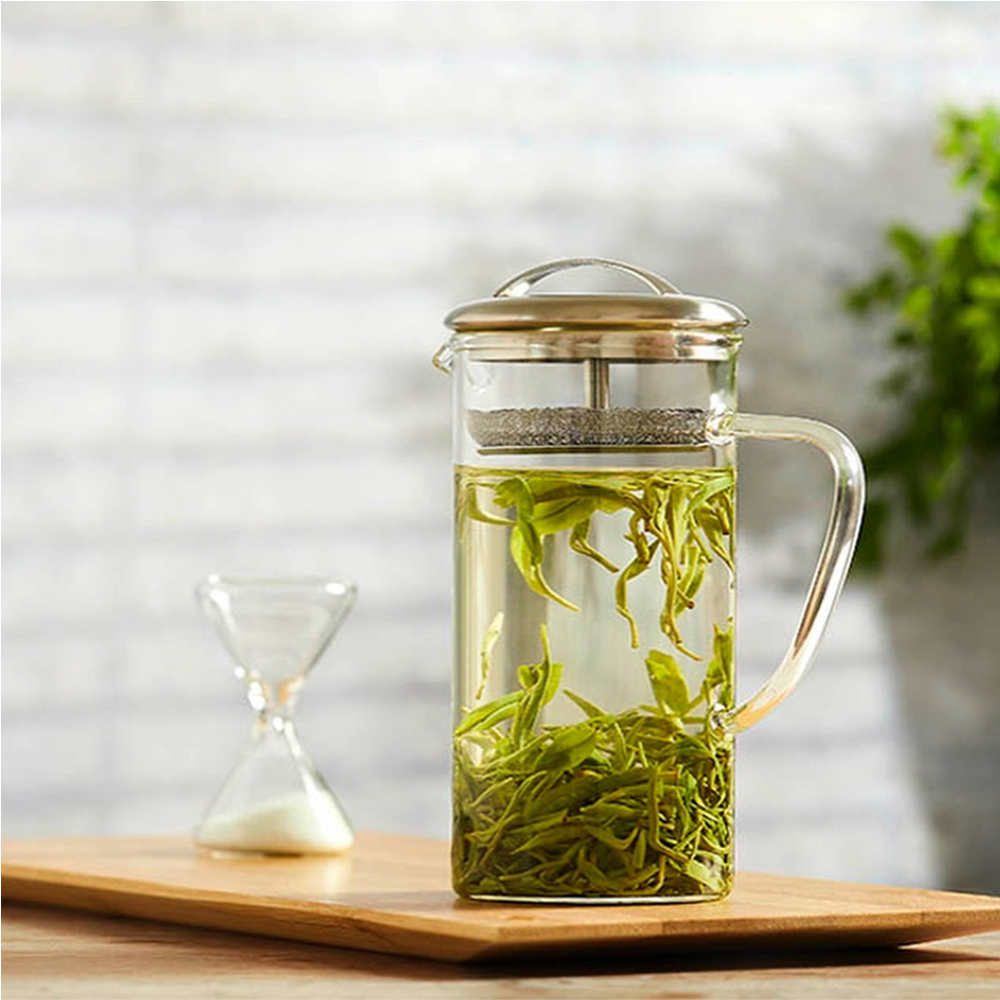
Chinese green tea is all about capturing the freshness of spring. After picking, the leaves are quickly heated – usually by pan‑firing in a hot wok, sometimes by steaming – to stop oxidation in its tracks. This “fixing” step locks the leaves in a vivid state, preserving their natural colour and many of their original vegetal aromas.
In the cup, that process translates into flavours that can be grassy, nutty, subtly sweet or reminiscent of fresh spinach and toasted seeds, depending on origin and style. The mouthfeel is usually clean and silky, the colour a clear pale green or yellow.
A beautiful example is Baojing Gold, a single‑origin green tea from a high, mountainous garden where the leaves are picked in a short early‑spring window at around 800–900m. The altitude slows growth and concentrates flavour; the pan‑firing gives the tea its gentle, chestnut‑like warmth.
To prepare Chinese green tea, think gentleness rather than force. Water around 75–80°C is ideal for most styles; boiling water will scorch the delicate leaves and strip tannins too quickly, resulting in bitterness. Start with an infusion time of 1–2 minutes, taste, and adjust to find the balance of freshness and sweetness you prefer.
White tea
White tea is the most understated of the Chinese tea categories. The leaves – often just the unopened buds, or buds plus the first leaf – are picked and then simply withered and dried. There is no rolling, shaping or deliberate oxidation; the result is a tea that feels incredibly close to the fresh leaf, with only the gentlest transformation.
In flavour, white teas tend to be light, soft and subtly sweet. You might find notes of hay, honey, fresh apricot or meadow flowers, often with a cooling, clean finish. The texture is gentle and cushioning rather than assertive.
Jasmine Silver Needle, for example, starts as a white tea made from tender spring buds. These buds are then laid beneath jasmine flowers that open only at night, allowing their scent to drift down and infuse the tea over five evenings. The result is a liquor that combines the delicacy of white tea with layered jasmine aromatics and notes of cucumber and melon.
White teas respond well to slightly cooler water than black teas but warmer than very delicate greens: around 80–85°C. Because the leaves are less processed, they can take slightly longer infusions – often 2–4 minutes – without turning harsh.
Yellow tea
Yellow tea is one of China’s rarest and most labour‑intensive categories. At first glance it resembles green tea: the leaves are fixed with heat soon after picking. But then comes an additional step known as “men huan”, or sealed yellowing. The warm, slightly damp leaves are wrapped in paper or cloth and allowed to rest for a short period, during which a mild, controlled oxidation occurs.
This extra stage mutes the punchy greenness of a pure green tea and rounds the edges, creating a liquor that is smoother, softer and often sweeter, with a gentle, almost custardy warmth. Grassiness recedes; a mellow, comforting character comes forward.
Because making yellow tea is so demanding and yields are small, it is one of the least produced categories in China. Genuinely good examples are difficult to source, and that rarity is part of what makes them special. When you find one, treat it like a precious green tea: water around 75–80°C, short initial infusions, and careful attention to how the taste evolves.
Oolong tea
Oolong is perhaps the most expressive category of Chinese tea. Sitting between green and black on the oxidation spectrum – anywhere from around 10% to 80% oxidised – it offers the widest flavour range of any type.
Light oolongs, often rolled into tight, jade‑coloured balls, can be intensely floral and creamy. Darker, strip‑rolled or roasted oolongs can be fruity, honeyed, nutty or even gently smoky. Processing is intricate: leaves are withered, shaken or tumbled to bruise their edges, allowed to oxidise in stages, rolled into shape and sometimes roasted over charcoal or electric heat.
Iron Buddha – JING’s take on Tieguanyin from Anxi in Fujian – sits in the middle of this spectrum. It is partially oxidised and lightly roasted, offering aromas of orchid and ripe fruit alongside a silky, almost creamy texture and a sweet, lingering finish.
Oolong rewards more than one infusion. Use water around 90–95°C and short, repeated infusions – 30–60 seconds at first, then slowly extending – especially if you are preparing it gongfu style in a small pot or gaiwan. Each infusion will highlight a different aspect of the leaf, from fresh florals to deeper roasted notes.
Black (red) tea
In Chinese terminology, what is known in the West as “black tea” is called hong cha – red tea – after the colour of the liquor rather than the dry leaf. These teas are fully oxidised: after withering and rolling, the leaves are allowed to oxidise until they reach a deep, even colour before being dried.
Chinese black teas often emphasise sweetness and aroma as much as strength. Depending on the region and cultivar, you may find malt, cocoa, dark honey, stone fruit, spice or even gentle smoke.
Cherrywood Lapsang is a refined take on a classic style. Traditionally, Lapsang Souchong from the Wuyi region was smoked heavily over pine wood, resulting in an assertively smoky cup. JING’s version uses cherrywood smoke more delicately, layering soft smokiness over notes of pine resin, dried fruit and dark chocolate, without overwhelming the tea’s natural sweetness.
To prepare Chinese black teas, water around 90–95°C works beautifully. Infuse for 3–4 minutes for a full, rounded cup. Compared with greens and whites, black teas are generally more forgiving of slightly longer times and higher temperatures.
Pu‑erh
Pu‑erh is where Chinese tea becomes a study in time. Produced primarily in Yunnan province, it is an aged, microbially fermented tea that continues to develop flavour long after it leaves the factory.
There are two main styles:
- Sheng (raw) Pu‑erh – made from sun‑dried green tea that is compressed and then allowed to age slowly over years or decades. In youth it can be bright, herbal and slightly astringent; with age it becomes deeper, smoother and more complex.
- Shou (ripe) Pu‑erh – created by accelerating the ageing process through a controlled piling and fermentation technique that takes several weeks to months, yielding a darker, earthier tea more quickly.
JING’s 2022 Ai Lao Mountains Raw Pu‑erh comes from high‑altitude gardens in the Ai Lao range, where tea trees grow among forest at around 2,000m. The altitude and biodiversity lend the tea a clear, mineral character, with notes of wild herbs, dried fruit and a long, cooling finish – and the potential to evolve in complexity over the coming years.
Pu‑erh is usually prepared with water at 95–100°C. A quick rinse of the leaves before the first infusion – pouring hot water over them, then immediately discarding it – wakes the tea and warms the leaves and vessel. Subsequent infusions can be short, especially at the start, and extended gradually as the leaves open and soften.
How to identify a quality Chinese tea
When you first open a packet of Chinese tea, a few simple checks can tell you a lot.
- Leaf appearance: High‑quality Chinese tea tends to have whole, unbroken leaves or carefully rolled balls, not dust or many broken fragments. Colours should be vivid and consistent for the style – bright green for fresh green tea, silvery buds for young white tea, glossy dark brown for black tea.
- Aroma: Before you even add water, the dry leaf should have a clear, appealing scent that is specific rather than vague – nuts and spring greens, wildflower honey, orchid, cocoa, pine. A dull, musty or faint aroma is often a warning sign.
- Origin: The label should tell you where the tea comes from – ideally down to region and sometimes individual garden or mountain. Names like Dragon Well from Hangzhou, Tieguanyin from Anxi or Pu‑erh from Yunnan carry meaning because they are tied to particular landscapes and crafts.
- Harvest timing: Many of the finest Chinese teas are picked in spring, in short windows when the weather aligns with the plant’s natural cycle. If harvest year or season is mentioned, it suggests a closer connection to the source.
Single‑origin sourcing and seasonality are central to JING’s approach. Rather than blending teas from many gardens to hit a generic flavour, we select from specific places at specific times, allowing each tea to express its own terroir and the work of its tea master.
How to serve Chinese tea
Preparing Chinese tea well is less about strict ceremony and more about understanding what each leaf needs. Three variables shape your experience: water temperature, infusion time and leaf‑to‑water ratio. From there, you can choose a serving style that suits the moment – from a simple pot on the table to a full gongfu set.
What temperature should I brew my tea?
Each category of Chinese tea is most expressive within a particular water temperature range:
- Green tea: 70–80°C, with very delicate styles closer to 70°C and more robust Chinese greens comfortable up to around 80–85°C.
- White tea: 80–85°C, giving enough warmth to coax out sweetness without flattening delicate florals.
- Yellow tea: similar to green tea, around 75–80°C.
- Oolong tea: 85–95°C, with greener oolongs at the lower end and darker, roasted styles at the higher end.
- Black (red) tea: around 90–95°C.
- Pu‑erh: 95–100°C.
Boiling water is ideal for Pu‑erh and many black teas; for greens and some whites, it is the most common mistake, scalding the leaf and pulling out bitterness faster than sweetness. If you don’t have a variable‑temperature kettle, allow boiled water to stand for a couple of minutes or decant into another vessel to cool slightly before infusing.
How long should I brew my tea for?
Infusion time is the second pillar. As a starting point:
- Green teas: 1–3 minutes for the first infusion.
- White teas: 2–4 minutes.
- Yellow teas: 1–3 minutes.
- Oolongs: 30–60 seconds for gongfu style; 2–4 minutes for Western‑style preparation.
- Black teas: 3–4 minutes.
- Pu‑erh: 10–20 seconds for early gongfu infusions after a rinse; 2–4 minutes for a single, larger Western‑style infusion.
Smaller, tightly rolled leaves – such as an Anxi oolong or a tea like Baojing Gold – tend to release flavour quickly once they have unfurled. Flatter, larger leaves – like Dragon Well – may need slightly longer to open up. The one habit to avoid with delicate teas is leaving the leaves sitting in the same water indefinitely in the cup; that almost guarantees bitterness.
Gongfu vs. Western-style brewing
“Western‑style” preparation uses a low leaf‑to‑water ratio and longer infusions to create a single, generous pot or mug. It’s straightforward and ideal for relaxed, everyday drinking: a teaspoon or two of tea to a pot, filled with hot water and left to infuse for a few minutes before pouring.
Gongfu style, traditional in China, uses a higher leaf‑to‑water ratio and many short, consecutive infusions. A small teapot or gaiwan is filled with leaves, hot water is added for 10–40 seconds, then the liquor is poured off entirely into a fairness pitcher or directly into cups. This is repeated, often six, eight or more times.
The result is a series of small, concentrated servings that let you follow the tea as it changes – first bright and high, then richer and deeper, then finally gentle and sweet. For complex oolongs and Pu‑erh, gongfu style reveals dimensions you may never see in a single long infusion.
Chinese teaware basics
You don’t need a full tea table to enjoy Chinese tea, but a few pieces of classic teaware can enhance both flavour and feeling.
Gaiwan (Tea Pot)
A gaiwan – literally “lidded bowl” – consists of a bowl, a saucer and a lid. It acts as both infusing vessel and server. Unlike a teapot with a spout, you pour by tilting the lid slightly to create a small gap, using it as a built‑in strainer while you decant the liquor into cups.
Because porcelain and glass gaiwans are thin and responsive, they give you a clear view of the leaves and precise control over infusion time. They are perfect for tasting multiple Chinese teas in succession.
Cha Bei (Tea Cups)
Cha bei are the small cups used in gongfu service, usually 30–50ml and often white‑lined porcelain. Their size is intentional: a small volume cools quickly to a pleasant temperature and encourages slow, attentive sipping. In that smaller space, aroma gathers, and texture and aftertaste become easier to notice than in a large mug.
Cha Pan (Tea Tray)
A cha pan is the tray that sits beneath your teaware, with a slatted top and a reservoir or drain underneath. Gongfu preparation involves plenty of “waste” water – used to warm vessels and cups, to rinse leaves and to catch the occasional spill. The tray allows you to pour freely without worrying about the table, making the whole process more relaxed.
What are the benefits of Chinese tea?
When sourced and handled with care, Chinese tea offers several intertwined benefits.
There is the agricultural dimension: by choosing teas from gardens where producers are paid fairly and landscapes are respected, you support indigenous farmers, local businesses and farming methods that value long‑term soil and ecosystem health.
There is the nutritional aspect: most Chinese teas are rich in naturally occurring antioxidants such as catechins and polyphenols. While rigorous scientific claims should be left to clinical studies, it is reasonable to say that a cup of unsweetened tea is a hydrating, low‑calorie drink that can be part of a balanced lifestyle.
And then there is the experiential benefit. Taking a few minutes to prepare and savour Chinese tea – measuring leaves, heating water, watching the colour deepen, noticing aroma – turns an everyday act into a small, grounding ritual. For many, that moment of focus and stillness is as valuable as anything in the leaf itself.
Start your Chinese tea journey with Jing Tea
JING are on a mission to revolutionise the world of tea – away from the dull, anonymous blends that fill supermarket shelves, towards single garden teas that carry the identity of their origin and maker in every cup. Chinese teas sit at the heart of that mission.
In our Chinese tea collection you’ll find everything from early‑spring green teas and elegant white teas to characterful oolongs, refined black teas and age‑worthy Pu‑erh. Each has been selected not just for category, but for provenance, altitude, season and the skill of the tea master behind it.
Whether you start with a bright green like Baojing Gold, a classic oolong such as Iron Buddha, a subtly smoked Cherrywood Lapsang or a contemplative Pu‑erh from the Ai Lao mountains, you’ll discover just how varied – and how transportive – Chinese tea can be.
Frequently asked questions
How many types of Chinese tea are there?
Within traditional Chinese tea culture, there are six main categories: green, white, yellow, oolong, black (called red tea in China) and Pu‑erh. Each is defined by how the leaves are processed and how far they’re allowed to oxidise, rather than by the plant variety itself.
What is the most popular Chinese tea?
Popularity depends on the region and context. Within China, fragrant oolong teas from Fujian and Guangdong, and green teas such as Dragon Well from Hangzhou, are widely loved. Internationally, Chinese black teas and jasmine‑scented teas are often the most familiar, while oolong and Pu‑erh have passionate followings among enthusiasts.
Is Chinese tea good for you?
Chinese teas are rich in natural antioxidants and, when taken without added sugar, offer a hydrating, low‑calorie way to enjoy complex flavour. They also invite small moments of calm and attention in the day. While no tea should be treated as a medicine, high‑quality Chinese tea can certainly play a positive role in a considered lifestyle.
How do you serve Chinese tea properly?
Serving Chinese tea well means matching category and context. Use cooler water and shorter infusions for green and white teas, warmer water and slightly longer times for oolong and black teas, and near‑boiling water for Pu‑erh. Decide whether you want a simple pot for sharing, or a gongfu set for multiple, small infusions that let you follow the tea’s evolution.
What is the difference between Chinese green tea and Japanese green tea?
Both come from Camellia sinensis, but style and preparation differ. Most Chinese green teas are pan‑fired, giving nutty, toasty, sometimes chestnut‑like notes and a clear, pale liquor. Many Japanese green teas are steamed, resulting in a deeper green colour, more pronounced umami, and flavours reminiscent of seaweed and cooked greens. Each reflects the culinary traditions and preferences of its home culture.