
Matcha’s vivid green and deep umami make it one of the most recognisable teas in the world. But behind that bowl lies a craft that’s anything but ordinary: weeks under shade, precise hand-picking, delicate steaming and hours of slow stone grinding.
In this guide, we’ll travel step by step through how authentic, high-quality matcha is made – from garden to bowl – so you can understand what you’re really tasting when you whisk a spoonful into water.
For a broader introduction, you can explore our guide to what matcha tea powder is or taste the results directly with our Ceremonial Matcha and wider matcha collection.
What is Matcha Made Of?
All true matcha begins with the same plant that gives us every fine tea: Camellia sinensis. But matcha is made from a very particular expression of that plant.
The leaves destined for matcha are grown under shade, then harvested, steamed and dried. At this stage, they’re called Tencha – a name reserved for leaves specifically prepared for matcha. Tencha:
- Comes from the youngest, most tender leaves at the top of the plant.
- Has had stems and veins removed to focus on pure leaf.
- Is never rolled or shaped like other teas; instead, it’s kept flat and delicate, ready for grinding.
Authentic ceremonial matcha uses 100% pure Tencha – no stalks, no fillers, no other powdered teas blended in. That purity is one of the key differences between a bowl that dazzles and a bowl that disappoints.
The Matcha Production Process
Shading
The story of matcha begins in shade.
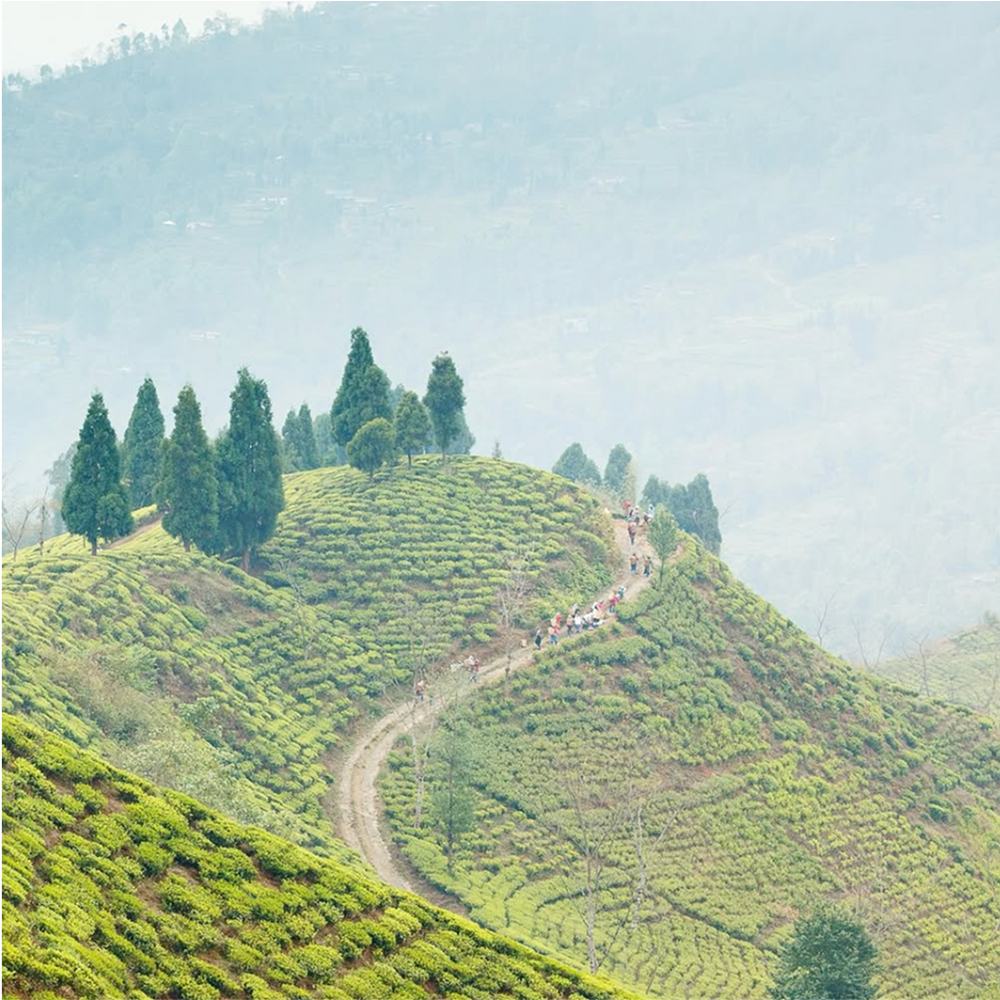
For around 3–4 weeks before harvest, tea plants are covered with traditional bamboo screens (tana) or modern black netting. This restricts sunlight, and the plant responds by:
- Producing more chlorophyll, deepening the leaf colour.
- Increasing L-theanine and other amino acids, which soften bitterness and enhance umami.
- Developing the sweetness and depth that define great matcha.
This intentional “stress” is not unlike how vines in a great wine region are encouraged to work harder to produce more concentrated fruit. It’s one of the non-negotiable steps for matcha of real character.
Harvesting
When spring arrives and the new growth appears, it’s time to pick.
For the finest grades:
- Only the youngest, topmost leaves are harvested.
- Plucking is often done by hand to ensure precision.
- Timing is crucial: the first flush of spring offers leaves that are at their most tender and nutrient-rich.
Imagine soft, deep green leaves that almost melt between your fingers – that’s the ideal raw material for exceptional matcha.
Steaming and Drying
Immediately after harvesting, the leaves are quickly steamed – usually for 15–20 seconds.
This brief steaming:
- Stops oxidation (the process that turns green leaves into oolong or black tea).
- Preserves the bright green colour and fresh, savoury notes.
After steaming, the leaves are gently dried, either in the air or using carefully controlled drying machines. At this point the tea is known as Aracha – a crude, unfinished tea that will be refined further for matcha.
Sorting (Tencha)
Next comes refinement.
The dried leaves are sorted to remove:
- Stems
- Veins
- Any coarse or fibrous parts
What remains is Tencha – pure leaf flakes that are soft, fragile and highly aromatic. Tencha is not usually brewed as a tea; it exists purely as the precursor to matcha.
By eliminating harder plant material, producers reduce astringency and ensure that the final powder feels satin-smooth, without grittiness or harshness.
Grinding
Finally, Tencha is transformed into matcha.
Traditionally, this is done using granite stone mills that turn slowly, grinding the leaves between heavy stones. The pace is deliberately unhurried – a single mill might produce only around 30g of matcha per hour.
This matters because:
- Slow grinding prevents heat build-up, which can damage delicate aromas and nutrients.
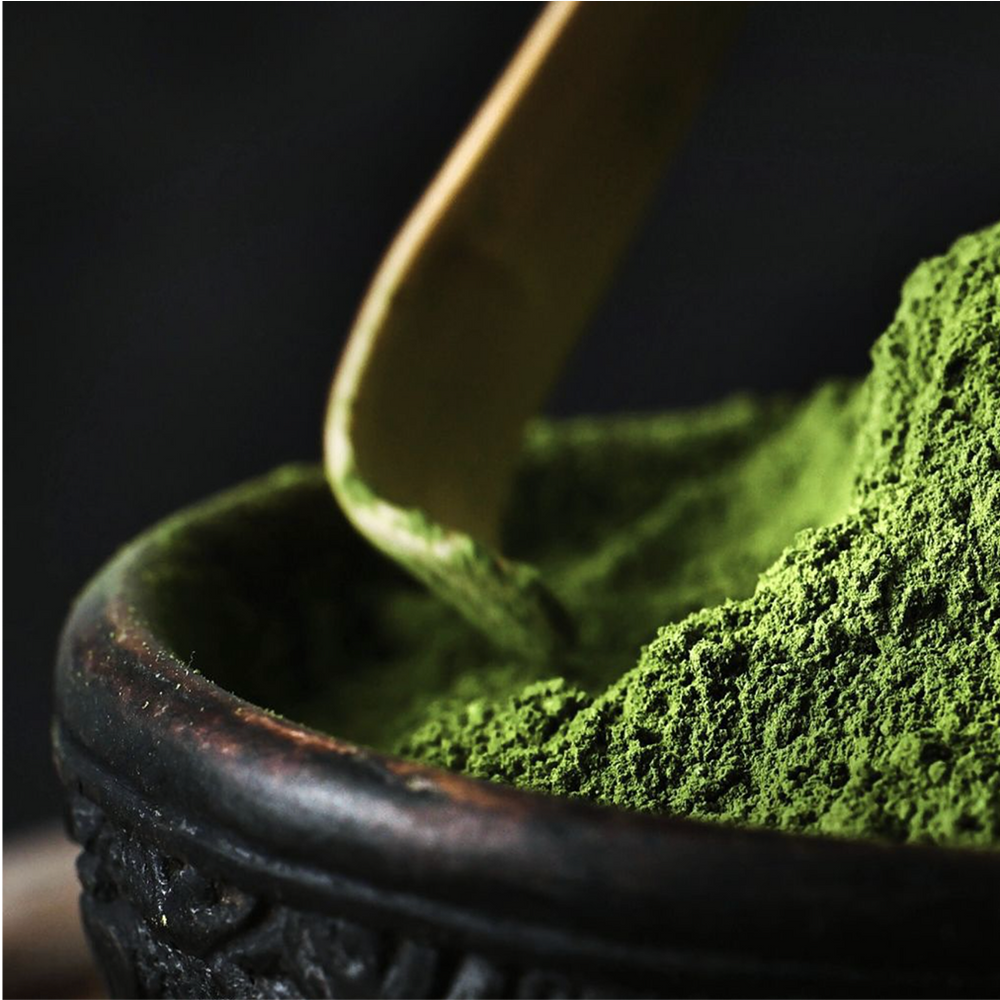
- The resulting powder is incredibly fine – comparable to talcum powder in texture.
Matcha made this way whisks easily, suspends beautifully in water and delivers a seamless, velvety mouthfeel.
Faster, industrial methods exist, but they often generate more heat and coarser particles, which can dull flavour and texture.
Traditional vs Modern Matcha Production
Modern technology has inevitably found its way into matcha production, but the very best examples still rely on traditional craft.
Stone-Ground Matcha
Granite stone mills are the gold standard for ceremonial matcha.
- They are slow and labour-intensive.
- Each batch is small, controlled and cool-ground.
- The resulting powder is exceptionally fine and uniform.
This is the method used for high-grade teas like our Ceremonial Matcha, where texture, aroma and nutritional integrity must all be protected.
Mechanically Ground Matcha
To meet global demand, many producers use ball mills or jet mills to grind Tencha faster.
- Output is higher.
- Costs are lower.
- But heat and friction can easily creep in, leading to coarser powder and muted flavours.
This style of production is often used for lower-grade or bulk culinary matcha, destined for lattes, confectionery and large-scale food production.
Culinary Grade Matcha
“Culinary grade” is a useful shorthand, but it’s not a regulated term.
Broadly, culinary matcha:
- Uses more mature leaves and sometimes later harvests.
- Is less vibrant in colour and more robust or bitter in flavour.
- Is ideal for recipes where matcha is mixed with other ingredients or heated.
What matters just as much as the label is sourcing. Some very low-quality powders are marketed as “ceremonial” despite lacking the depth, purity and care true ceremonial matcha demands.
At JING, our matcha collection is curated with a simple principle: only matcha that meets our standards of taste, provenance and craft makes it into the range.
Summary
Matcha’s vivid colour, concentrated nutrients and deep umami are not accidents; they’re the natural result of a meticulous, centuries-old process:
- Shading the plants to boost chlorophyll, sweetness and L-theanine.
- Harvesting only the youngest, most tender leaves at the right moment.
- Steaming and drying to preserve greenness and freshness.
- Sorting into Tencha, removing stems and veins for a smoother, sweeter profile.
- Stone grinding to a talc-fine powder that suspends beautifully in water.
When all of these stages are respected, matcha stops being simply a “healthy green powder” and becomes something far more interesting: a crafted, origin-expressive tea, as nuanced as a fine wine.
If you’re ready to experience that craft in the cup, explore our Ceremonial Matcha, learn more in our guides to what matcha tea powder is and what matcha tastes like, or discover new favourites in the full JING matcha collection.
Leave A Comment