The top 5 teas for focus and concentration
It is three in the afternoon. There is a deadline, a blank screen, or a revision list that needs two more hours of actual concentration, and coffee has already done its work and left. The spike has passed; what remains is something between restlessness and fatigue.
Tea offers a different kind of lift. Not because it is weaker than coffee, but because its caffeine works differently when paired with L-theanine, an amino acid found only in the tea plant that smooths the stimulant effect into something calmer and more sustained. This article gives you real numbers, not vague wellness claims, on which teas actually help you concentrate and why.
For a full breakdown of caffeine levels across tea types, our guide to caffeine in tea covers the full picture with honest, sourced figures.
Why tea helps you focus
Every true tea, from green to black, contains both caffeine and L-theanine. Caffeine provides alertness by blocking adenosine receptors in the brain, reducing the feeling of tiredness. L-theanine is an amino acid that promotes a calm, alert mental state by modulating neurotransmitter activity. Together, the two compounds produce a focus effect that is qualitatively different from caffeine alone: less of a spike, less of a crash, and a calmer quality of attention that many people find better suited to sustained thinking than the sharper energy coffee provides.
Caffeine levels in tea vary considerably depending on the type and how it is prepared. Matcha delivers 60 to 70mg per serving because the whole leaf is consumed. Green tea typically delivers 20 to 45mg. White tea sits at around 15 to 30mg. Oolong falls between 30 and 50mg. This means the intensity of focus can be dialled up or down simply by choosing a different tea for a different part of the day.
There is a practical reason why sourcing and freshness matter beyond flavour. Fresher, higher-grade loose leaf retains more L-theanine than mass-market tea bags, where the leaf has often been ground, blended, and sitting in storage for months. The calm-focus effect that makes tea different from coffee depends on L-theanine being present in meaningful amounts, which is why well-sourced leaf outperforms a standard bag for this specific purpose.
The top 5 teas for focus
These five are ranked by use case, from the most sustained and powerful lift to the gentlest, suitable for different moments in the working day. Each entry includes a caffeine range, a note on its L-theanine character, the best time of day to drink it, and one infusing tip.
1. Ceremonial grade matcha
Caffeine: 60 to 70mg per serving. L-theanine character: high, with the full-leaf consumption meaning more L-theanine alongside the higher caffeine than any steeped tea delivers. Best time: morning, before a demanding work block.
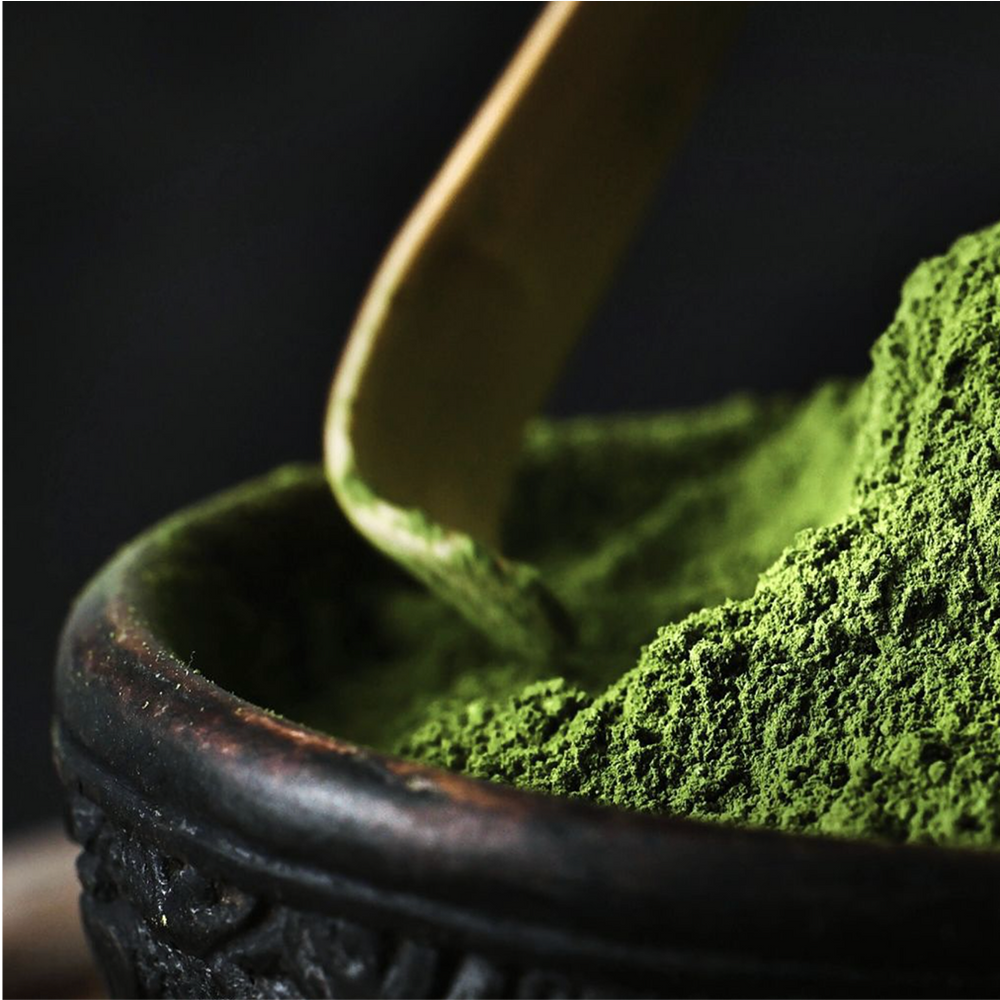
Matcha delivers the strongest, most sustained lift of any tea in this list. Because the whole leaf is ground and consumed rather than infused and discarded, every compound the leaf contains ends up in the cup, which is why the caffeine and L-theanine combination is more complete than in a steeped version of the same leaf.
Ceremonial grade matters here specifically. Higher-grade, shade-grown, first-harvest matcha consistently delivers more L-theanine than culinary grade, because shade-growing concentrates the amino acid in the leaf. A cheap culinary matcha may give you caffeine but will not give you the same quality of calm focus.
Infuse with water at around 75°C and whisk for 20 to 30 seconds with a bamboo chasen for a smooth, properly aerated bowl.
JING's ceremonial grade matcha is shade-grown, stone-milled to order from Okumidori leaves in Kirishima, Kagoshima, and packed immediately after milling.
2. Gyokuro
Caffeine: approximately 35 to 50mg per serving, with an unusually high L-theanine content for a steeped tea. Best time: mid-morning, for close reading, writing, or work that requires sustained, undistracted attention.
Gyokuro is shade-grown for three to four weeks before harvest, which concentrates L-theanine in the leaf to a degree not achieved by most other teas. This is what makes it different from sencha: the shading suppresses photosynthesis and diverts the plant's energy toward amino acid production, making gyokuro the smoothest, calmest focus of the five teas on this list. The caffeine is there, but it is wrapped in enough L-theanine that the lift feels measured and quiet rather than stimulating.
Infuse at a low temperature, around 60 to 70°C, for 90 seconds. Higher temperatures or longer times will extract bitterness that would otherwise stay locked in the leaf.
JING's gyokuro tea is sourced from named gardens in Japan and prepared to the standard that this delicate tea demands.
3. Sencha
Caffeine: 20 to 45mg, depending on leaf grade and infusing time. Best time: throughout the day as a steady, moderate lift.
Sencha is Japan's most widely consumed tea and the most practical daily focus tea on this list. It provides a moderate caffeine lift with a meaningful L-theanine content, making it well suited to the kind of background focus needed for sustained work rather than a single intense effort. It is also the most forgiving in terms of preparation: a slightly longer or shorter infusion changes the strength but does not dramatically change the quality of the focus effect.
Infuse at around 70 to 75°C for 1 to 1.5 minutes. Remove the leaves promptly to avoid bitterness.
JING's sencha green tea is a Japanese loose leaf sencha with the freshness and L-theanine content that distinguishes well-sourced leaf from a mass-market alternative.
4. White Peony (Bai Mu Dan)
Caffeine: 15 to 30mg per serving. L-theanine character: gentler than the green teas above, but present. Best time: afternoon or early evening for mental clarity without risking disrupted sleep.
White Peony is the gentlest option on this list, made from the newest buds and young leaves of the tea plant before they are processed in any significant way. The low caffeine makes it the right choice for later in the day, when the goal is clarity and calm attention without the risk that a stronger tea would interfere with sleep. The focus effect is subtle but real, particularly for someone who is sensitive to caffeine and finds that even a moderate green tea tips them into jitteriness.
Infuse at around 80°C for 2 to 3 minutes.
JING's white tea is a Yunnan White Peony with the delicate sweetness and gentle character of a well-made bai mu dan.
5. Ali Shan high mountain oolong
Caffeine: 30 to 50mg per serving. L-theanine character: rounded and sustained, sitting between green and black tea in its effect. Best time: mid-afternoon, particularly for the 3pm slump.
Ali Shan oolong from Taiwan is partially oxidised, which places it between green and black tea in both flavour and caffeine. The result is a rounded, sustained lift that is less sharp than matcha and more substantial than white tea, which makes it particularly well suited to the afternoon slump when you need energy to return but a heavy dose of caffeine would be counter-productive. The high altitude at which Ali Shan is grown concentrates the flavour and, by extension, the compounds that make oolong one of the more nuanced focus teas available.
Infuse at around 85 to 90°C for 2 to 3 minutes, and re-infuse: a quality oolong reveals different layers across multiple infusions.
JING's oolong tea is sourced from Ali Shan at altitude, with the floral, creamy depth that distinguishes Taiwanese high mountain oolong from lower-grown alternatives.
How to infuse tea for maximum focus
The infusing method you use affects how much L-theanine and caffeine you extract, and therefore the quality of the focus effect. Lower water temperatures and gentler infusion times draw out more L-theanine relative to tannins, which is why the calm-focus effect of a properly prepared gyokuro or sencha is more pronounced than that of an over-steeped version of the same tea.
Over-infusing releases more tannins, which tips the balance back toward bitterness and can produce a slightly more jittery quality rather than the smooth, sustained attention that L-theanine is responsible for. Timing matters as much as the tea itself, which is worth remembering when the goal is focus rather than simply warmth in the cup.
Loose leaf infuses stronger and fresher than bagged tea because whole leaves retain more of their original compounds, a practical reason why single-garden loose leaf outperforms supermarket bags specifically when the L-theanine content is the point.
Tea vs coffee for sustained focus
Coffee delivers roughly 80 to 100mg of caffeine per cup with very little L-theanine. The effect is faster and sharper, which is why it feels more immediately stimulating. The trade-off is a steeper come-down when the caffeine clears, and for many people a jitteriness during the peak that makes it harder rather than easier to concentrate on detailed work.
Tea's caffeine-and-L-theanine curve is shallower and longer. The lift is less dramatic but more sustained, and the calm that L-theanine promotes means the focus that follows is often better suited to the kind of work that requires settled, continuous attention: writing, reading, analysis, and anything that benefits from not being interrupted by your own nervous system.
The case is not to cut caffeine altogether but to make a considered swap: one coffee replaced by a well-sourced matcha or gyokuro on days when sustained focus matters more than a quick jolt.
For a detailed comparison of how the two drinks compare compound by compound, matcha vs coffee covers the full picture.
Find your focus tea
The starting point depends on what you need and when. For the strongest, most sustained lift on a demanding morning, ceremonial matcha is the answer. For the smoothest, calmest focus on work that requires quiet attention, gyokuro. For an all-day steady lift, sencha. For the afternoon, oolong. For evenings or anyone sensitive to caffeine, white peony.
Explore JING's best-selling teas to find the cup that fits your routine.
Frequently asked questions
Does tea really help you focus?
Yes. The combination of caffeine and L-theanine in tea supports alertness without the sharp spike and crash associated with coffee, producing a calmer, more sustained quality of concentration. The effect is well documented and is the basis for the long association between tea and focused mental work in Japanese and Chinese culture.
What is the best tea for studying?
Gyokuro and ceremonial matcha are the strongest choices for focused study sessions, thanks to their high L-theanine content and, in matcha's case, higher caffeine from consuming the whole leaf. For longer sessions across the day, sencha provides a more moderate and sustainable lift.
How much caffeine is in tea compared to coffee?
Tea generally contains less caffeine than coffee per cup, ranging from around 15mg in white tea up to 70mg in matcha, compared to roughly 80 to 100mg in a standard coffee. The key difference is not just the amount but the presence of L-theanine in tea, which changes how the caffeine is experienced.
What does L-theanine do for focus?
L-theanine is an amino acid found naturally in the tea plant that promotes a calm, alert mental state by modulating neurotransmitter activity in the brain. It smooths out the stimulating effect of caffeine rather than blunting it, which is what produces the calm-focus combination that makes tea different from coffee.
Can you drink tea for focus in the afternoon without affecting sleep?
Yes, if you choose a lower-caffeine option. White Peony at 15 to 30mg of caffeine is well suited to afternoon focus without the risk of disrupted sleep, particularly if drunk before 3pm. Ali Shan oolong at 30 to 50mg is another good afternoon option for most people. Matcha and gyokuro are better reserved for morning use.