Oolong is a partially oxidised tea made from the leaves of the Camellia sinensis plant, the same plant that produces green and black tea. It sits between the two in oxidation: more concentrated than green tea, less concentrated than black tea. This partial oxidation is what makes oolong one of the most varied and complex styles of tea in the world, ranging from fresh, floral and almost green-tasting at the light end to dark, toasty and richly mineral at the darker end.
If you know green and black tea and have kept seeing oolong mentioned, this is the guide that explains what it is, how it tastes, where it comes from, and how to get the best from it at home.
Explore JING's loose leaf oolong tea collection to see the range.
What is oolong tea?
The name oolong comes from the Chinese wu long, meaning black dragon, a reference to the dark, twisted appearance of traditionally processed oolong leaves. The tea originated in China's Fujian province, where the distinctive combination of withering, tossing and partial oxidation developed over centuries. It is now also strongly associated with Taiwan, where high-mountain oolongs like Ali Shan have become some of the most prized teas in the world.
What makes oolong its own category, distinct from both green and black tea, is the controlled partial oxidation. By allowing the leaf to oxidise for a shorter time and at a lower rate than black tea, and then stopping that oxidation by applying heat, producers can create a huge range of flavour profiles from the same starting material. Oxidation level, rolling technique and the decision of whether to roast the finished tea all shape what ends up in the cup.
How oolong tea is made
After picking, the leaves are spread out to wither, losing moisture and becoming pliable. They are then tossed or bruised to break the edges and initiate oxidation: the exposed surfaces start to change colour and develop aromatic compounds. The tea maker monitors the progress and, when the desired level of oxidation is reached, applies heat to stop it, in a step called fixing, which locks in the character at that moment. The leaves are then rolled, either into tight balls or long twisted strips, and dried. Some oolongs go through a final roasting step, which adds an additional layer of toasty, warm complexity.
The oolong oxidation spectrum
Lightly oxidised oolongs, typically 15 to 30 percent oxidised, taste closer to green tea: fresh, floral and delicate, with natural sweetness and a clean finish. Heavily oxidised oolongs, at 60 to 80 percent or more, taste much closer to black tea: dark, rich and warming, with baked fruit notes and sometimes a mineral depth. The vast majority of oolong sits somewhere between these poles, which is what gives the category its extraordinary range.
Is oolong tea black tea?
No. Black tea is fully oxidised, which means the leaves turn dark and the catechins in the leaf are fully converted into theaflavins and thearubigins, the compounds that give black tea its characteristic colour and flavour. Oolong is only partially oxidised, which means some of those original green tea compounds remain alongside the compounds produced by oxidation. This is what gives oolong its complexity: it has qualities of both a green and a black tea without being either.
The confusion is understandable. Darker, heavily roasted oolongs can look very similar to black tea in the cup and carry some of the same warmth and body. But they are a different category, processed differently and tasting quite unlike a black tea when you know what to look for.
Oolong is not green tea either: green tea is not oxidised at all, which is why it tastes fresh and vegetal. Oolong's partial oxidation adds a complexity and depth that green tea does not have.
What does oolong tea taste like?
Oolong taste depends on where the tea sits on the oxidation spectrum. This is not a vague statement: a lightly oxidised Taiwanese high-mountain oolong and a heavily roasted Traditional Iron Buddha taste so different from each other that many people do not initially recognise both as oolong. What they share is a complexity that develops across multiple infusions, with different notes coming forward in each pour.
Light and floral oolong
Lightly oxidised oolongs are creamy, floral and gently fruity, with a sweetness that feels almost milky. Ali Shan oolong from Taiwan is one of the finest examples: grown at high altitude in the mountains of Chiayi county, it produces notes of apricot, cream and fresh flowers that unfold across each infusion. Iron Buddha (Tie Guan Yin) from Anxi in Fujian is another classic: floral and peachy, with a long clean finish and a very gentle astringency.
Fruity and aromatic oolong
Dan Cong oolongs from Phoenix Mountain in Guangdong are named for the aromas they carry, each cultivar developed specifically to produce a particular character. Phoenix Honey Orchid is heady, honeyed and peachy, with a natural fragrance so distinctive it barely resembles what most people associate with tea. Our deep dive into Phoenix Honey Orchid oolong covers its origin and character in full.
Dark and roasted oolong
Heavily oxidised and roasted oolongs carry toasty, mineral and warming notes with baked fruit and sometimes a walnut or Brazil nut depth. Wuyi rock oolongs from the Wuyi Mountains in Fujian, known as yan cha, are the defining examples: mineral-rich and complex, with a characteristic "rock rhyme" that comes from the mineral-dense soil. Traditional Iron Buddha is a roasted version of the classic Anxi style, where the roasting transforms the floral, peachy character of the unroasted version into something nutty, warming and deeply satisfying.
How roasting changes oolong tea taste
Comparing Iron Buddha with Traditional Iron Buddha is one of the most instructive exercises in understanding oolong. Both are made from the same cultivar in the same region, processed in the same way up to a point. The roasting step that produces the traditional version transforms the character entirely: what is floral and bright becomes nutty and warming, what is lightly sweet becomes rich and complex. This is the point of difference that most writing about oolong overlooks, and it explains why two teas with almost the same name can taste so entirely unlike each other.
Types of oolong tea
Oolong types are usually named after the place they come from or the cultivar they are made from, which makes them easier to navigate once you understand the geography.
Chinese oolong tea
The three great oolong-producing regions of China each produce a distinct style. Anxi in Fujian is home to Iron Buddha, or Tie Guan Yin, the most widely drunk Chinese oolong in the world: floral, peachy and smooth in its unroasted form, or nutty and warming when roasted. The Wuyi Mountains, also in Fujian, are home to the rock oolongs or yan cha, including the famous Da Hong Pao: heavily oxidised, mineral-rich and complex in a way that is quite unlike anything else. Phoenix Mountain in Guangdong produces the Dan Cong oolongs, including Phoenix Honey Orchid, where each cultivar is developed to produce a specific aromatic character.
For a broader guide to Chinese tea culture and the teaware used to infuse these teas traditionally, our guide to Chinese tea and our Chinese teaware guide are good places to continue.
Taiwanese oolong tea
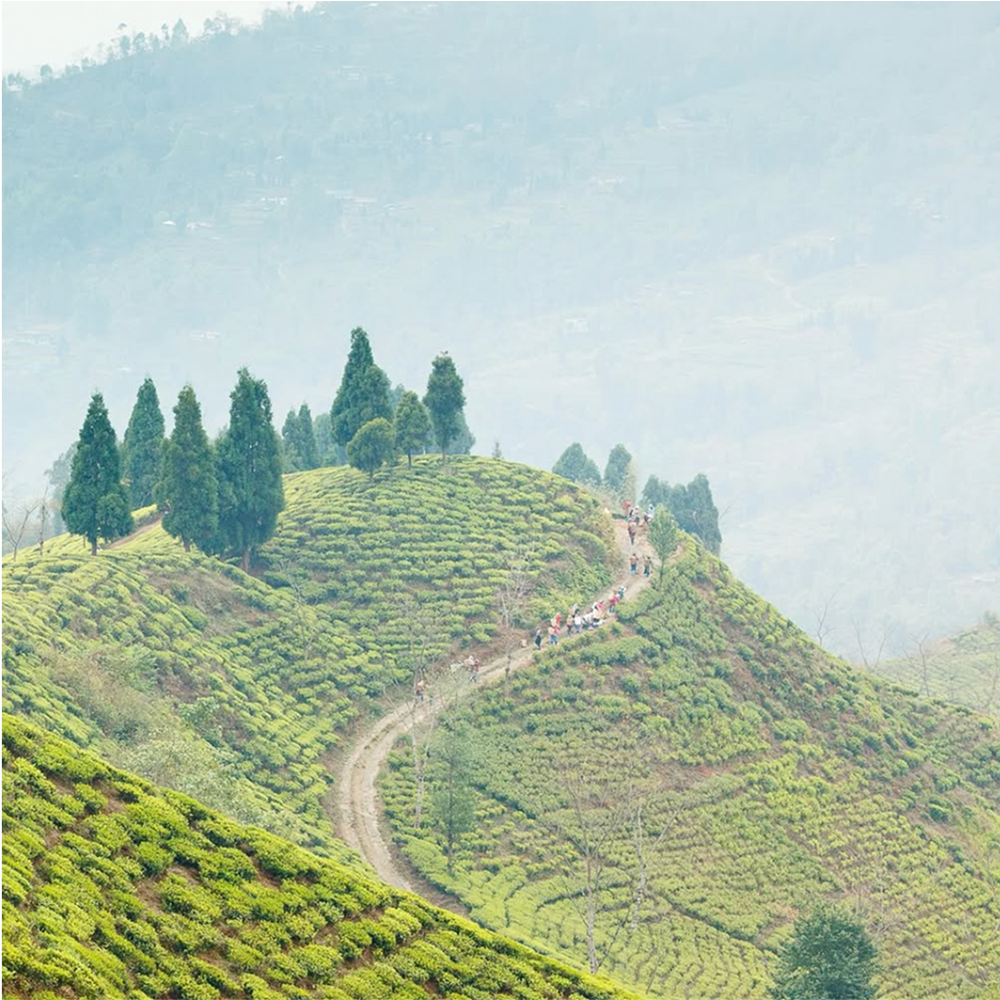
Taiwan produces some of the world's most prized oolongs, particularly the high-mountain styles grown at altitude in central Taiwan. The altitude, combined with morning mists and cool temperatures, slows the growth of the plants and concentrates their flavour. Ali Shan, grown in the mountains of Chiayi county, is the most accessible example: creamy, floral and sweet, with a long finish and a natural smoothness that makes it one of the easiest oolongs to fall in love with.
JING's Ali Shan oolong is sourced from high-altitude gardens at over 1,200 metres. For more on Taiwan's tea culture, our Taiwanese tea guide and the Ali Shan vs Li Shan comparison cover the key distinctions.
Does oolong tea have caffeine?
Yes. All true tea from the Camellia sinensis plant contains caffeine, and oolong is no exception. Oolong's caffeine content typically sits between green tea and black tea, at around 30 to 50mg per cup depending on the tea, the amount used and how it is infused. A longer infusion and more leaf will extract more caffeine; a shorter infusion with less leaf will extract less.
Like all teas, oolong contains L-theanine alongside its caffeine, which gives a calmer, more sustained kind of alertness than coffee provides. The combination of the two is what makes tea a different experience from coffee even at similar caffeine levels.
For exact figures and a comparison across tea types, what teas contain the most caffeine and the truth about how much caffeine is in tea cover this with honest, sourced figures.
Oolong tea benefits
Oolong contains polyphenols, including catechins from its partial oxidation and theaflavins from its more developed oxidation, which act as antioxidants. It contains L-theanine, associated with calm alertness and a more measured energy than caffeine alone. And it is a flavourful, naturally sweet drink that can be enjoyed across multiple infusions from the same leaves, which makes it genuinely good value as well as enjoyable.
The research around oolong's specific health associations is ongoing, and the honest position is that it should not be reduced to a list of medical claims. What can be said without qualification is that a good oolong is a complex, deeply pleasurable drink with no sugar, no additives and a caffeine-and-L-theanine combination that most people find genuinely agreeable.
How to infuse oolong tea
Oolong needs hotter water than green tea but not quite as hot as black tea. Start at around 85 to 90°C for most styles, with lighter, more delicate oolongs at the lower end and dark, roasted styles at the higher end. Use more leaf than you would for a single Western-style infusion: a heaped teaspoon or more per 150ml is appropriate.
The most important thing to understand about infusing oolong is that it rewards multiple short infusions rather than one long steep. The first infusion, kept to around 30 to 60 seconds, is bright and immediately aromatic. The second and third open up with more depth and complexity. By the fourth or fifth, the tea has changed again, often becoming rounder and more mellow. A quality oolong will yield six or more distinct infusions from the same leaves, each revealing a different dimension of its character.
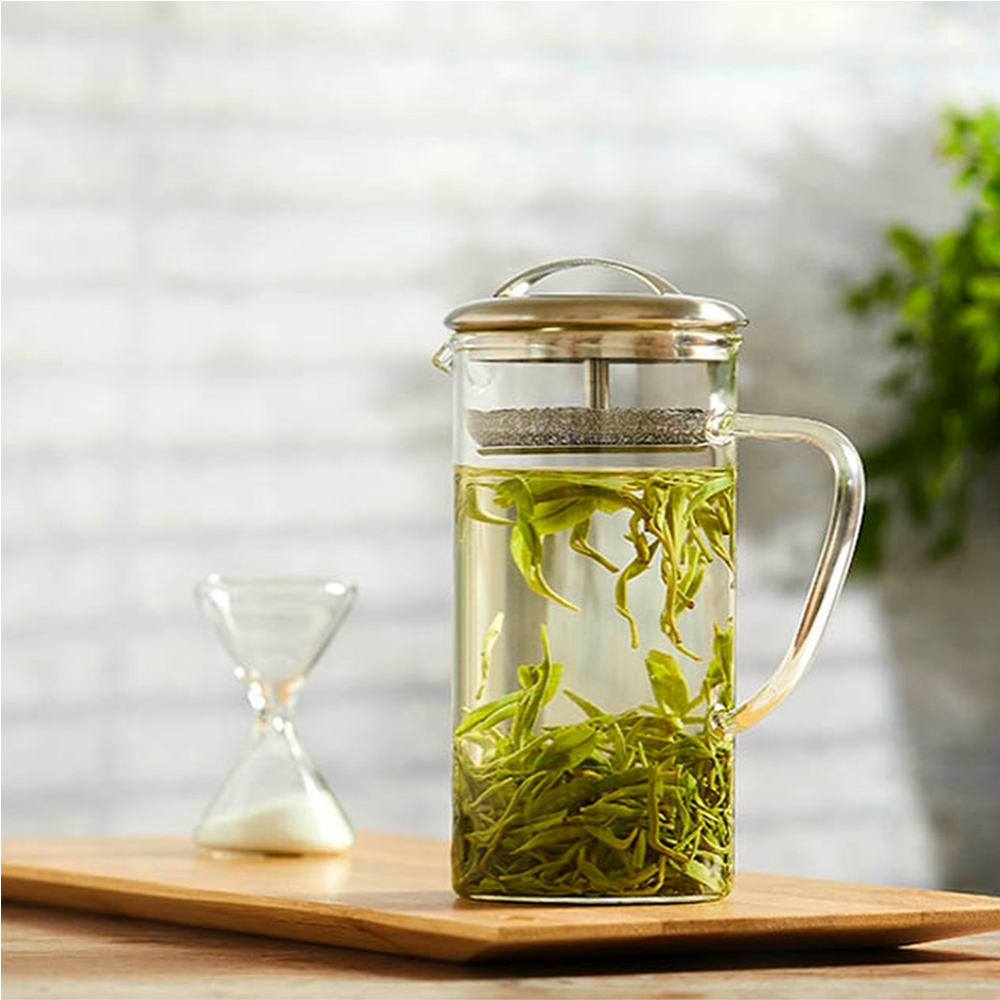
Watch the rolled leaves unfurl as they infuse, and give them room to open: a vessel that is too small restricts the expansion of the leaf and limits what you get in the cup.
The gongfu method
Gongfu cha, the traditional Chinese method of infusing tea, is particularly well suited to oolong. Use a small gaiwan or Yixing teapot, a high ratio of leaf to water, and multiple short infusions of 10 to 40 seconds each, pouring the entire infusion out each time before starting the next. This method reveals the full arc of how an oolong changes across infusions, which is where its character really shows.
For a complete guide to the method and the tools it requires, our Chinese teaware guide covers gongfu cha in detail.
Western style infusing
A larger teapot or a mug with a loose leaf infuser and a single infusion of 2 to 3 minutes is a perfectly good way to start with oolong, particularly if you are new to multiple infusions. Use water at 85 to 90°C, remove the leaves at the end of the infusion, and taste. Adjust time and leaf amount on the next cup based on what you want more or less of.
How to drink oolong tea
Drink oolong plain. This is not a stylistic preference but a practical one: oolong's natural sweetness and aromatic complexity are what make it interesting, and milk or sugar would cover exactly those qualities. A good oolong needs nothing added to be a genuinely rewarding cup.
Lighter, floral oolongs pair well with delicate food: fresh fruit, pastries, lightly flavoured fish. Roasted, darker oolongs work well after a meal, where their warmth and depth feel particularly satisfying. Oolong also makes an excellent cold infusion in summer: add a generous amount of leaf to cold water and leave it in the fridge overnight for a smooth, naturally sweet cold tea that needs no sweetening.
Discover JING's loose leaf oolong tea
The range covers the main styles and regions that make oolong so compelling. Ali Shan for creamy, high-mountain floral sweetness. Phoenix Honey Orchid for heady, honeyed Dan Cong character. Traditional Iron Buddha for toasty, warming depth. Each tea comes from a named producer and a specific garden.
Explore JING's loose leaf oolong collection and find your starting point.
Frequently asked questions
Is oolong tea green tea or black tea?
Neither. Oolong is its own category: partially oxidised tea that sits between unoxidised green tea and fully oxidised black tea. It has qualities of both without being either, and its flavour ranges from fresh and floral to dark and roasted depending on how much oxidation the tea maker allows.
Does oolong tea have more caffeine than green tea?
Generally a little more, but all true tea contains caffeine, how much depends on the leaf, how much you use, how hot the water is and how long you infuse it.
What does oolong tea taste like?
It depends on the style. Lightly oxidised oolongs are floral, creamy and gently fruity, with a natural sweetness. Heavily oxidised and roasted oolongs are toasty, mineral and warming, with baked fruit and nut notes. Most oolongs sit somewhere between these, with a complexity that develops across multiple infusions.
How many times can you infuse oolong tea?
Good quality loose leaf oolong can typically be infused five to eight times or more, with the flavour changing significantly with each pour. This is one of oolong's most distinctive qualities: early infusions are bright and aromatic, while later ones are rounder and more mellow. The full character of a good oolong only reveals itself across several infusions.
Should you drink oolong tea with milk?
Generally no. Oolong's natural sweetness, aromatic complexity and long finish are what distinguish it from other teas, and these are exactly the qualities that milk would suppress. Drinking oolong plain lets you taste what makes it interesting. The exception, if any, might be a very dark, heavily roasted oolong where the flavour is robust enough to hold its own alongside a small amount of milk, but even then, plain is the better starting point.