Matcha Caffeine Content Explained
Matcha has a reputation: vivid green, gently energising and somehow calmer than coffee. But how much caffeine does matcha actually contain? Is it stronger than green tea? And what makes its energy feel so different?
In this guide, we’ll explore matcha caffeine content in detail – how much is in a typical serving, how it compares with coffee and other teas, and why matcha is so often associated with “calm alertness” rather than spikes and crashes.
Along the way, we’ll connect the science of caffeine and L-theanine with the reality in your cup, and show you how to choose matcha that matches your energy needs. If you’re new to matcha more broadly, you may also enjoy our guides to green tea vs matcha and the benefits of matcha.
Does Matcha Have Caffeine?
Yes – matcha definitely contains caffeine.
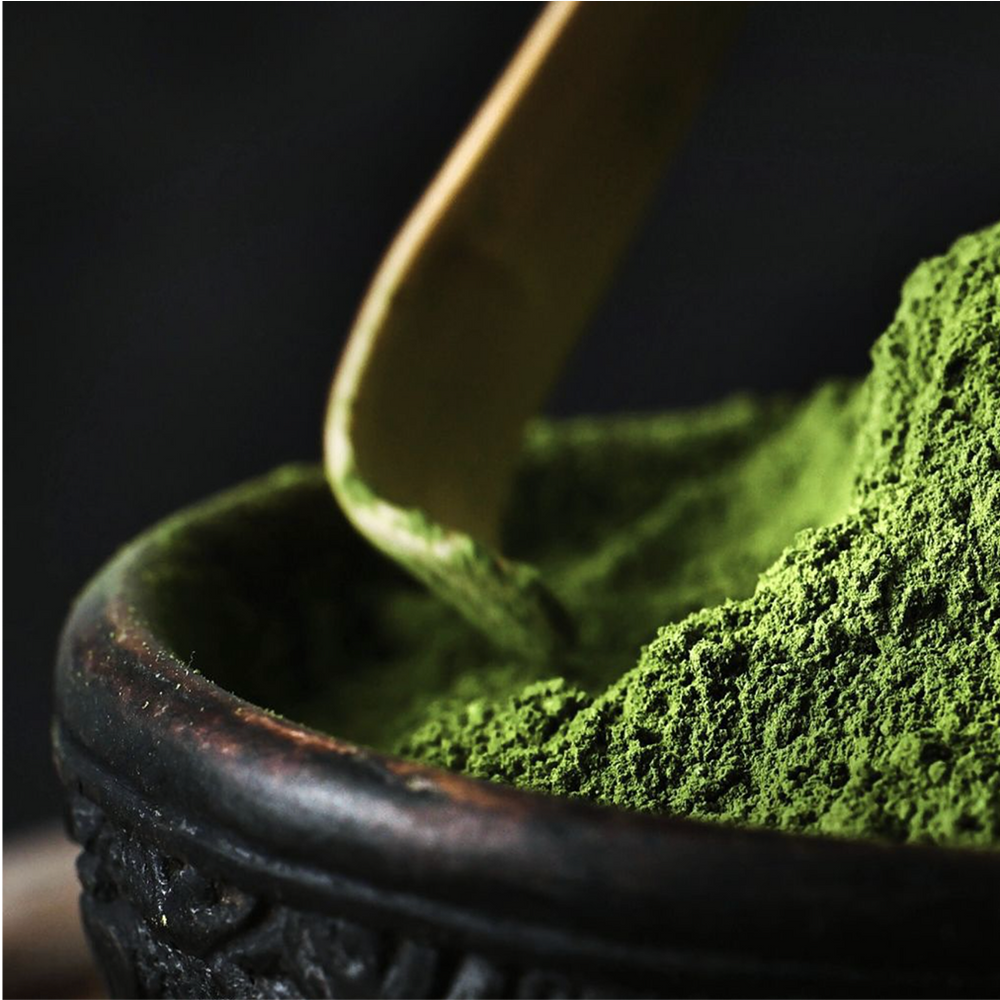
Like all true teas made from the Camellia sinensis plant, matcha naturally carries caffeine. Because it is a powdered tea and you consume the whole leaf rather than an infusion, matcha is usually higher in caffeine than a standard cup of green tea.
In broad terms:
- A typical serving of matcha (around 1–2g of powder whisked with water) contains roughly 60–70mg of caffeine.
- This will vary depending on the grade of matcha, how much powder you use and how you prepare it.
A few reasons matcha can be particularly caffeine-rich:
- Shade-grown leaves – Shading before harvest encourages the plant to produce more caffeine and L-theanine.
- You drink the leaf – Unlike steeped tea, where leaves are removed, matcha keeps everything in the cup.
- High leaf-to-water ratio – A bowl of matcha can contain more leaf material per sip than a typical teapot infusion.
High Caffeine Matcha
Not all matcha has the same caffeine level. Some styles naturally sit at the higher end.
You’re likely to find more caffeine in:
- Ceremonial grade matcha – It’s made from the youngest, top-growth leaves from the first harvest. These are naturally higher in caffeine.
- Longer-shaded matcha – Extended shading before harvest boosts caffeine and L-theanine concentrations.
- Stronger preparations – Using more powder (for example, 2g rather than 1g) or less water will increase the caffeine per cup.
If you’re seeking a clean but noticeable lift – for deep work, creative projects or early-morning clarity – a well-sourced ceremonial matcha, like our Ceremonial Matcha, is a powerful yet smooth option.
Low Caffeine and “Decaf” Matcha
There’s no such thing as truly caffeine-free matcha in the traditional sense. Because matcha is made from whole tea leaves, removing the caffeine without damaging flavour and quality is extremely difficult.
However, you still have options if you’re caffeine-sensitive:
- Use less powder – Halving your usual dose (for example, from 2g to 1g) will cut your caffeine intake while still giving you flavour and antioxidants.
- Choose a lighter style – Some culinary or more everyday matcha powders made from later harvests and a mix of leaf material can be slightly lower in caffeine than top ceremonial.
- Drink earlier in the day – Enjoy your matcha in the morning or early afternoon, letting your body fully process the caffeine before bedtime.
If you’re exploring matcha primarily for its wellness benefits rather than its stimulation, our article on the benefits of matcha can help you decide how it might fit into your day.
Matcha Caffeine Comparisons
To understand matcha’s place in your routine, it helps to compare it with drinks you might already know – but it’s important to compare like with like.
Serving size, brewing method and strength all make a difference.
How Much Caffeine in Matcha vs Coffee?
On paper:
- A typical bowl of matcha (1–2g powder) contains about 60–70mg of caffeine.
- A standard cup of filter coffee can range from 80–120mg, sometimes more.
So matcha usually has slightly less caffeine than a strong coffee, but more than most single cups of tea.
In practice, the experience feels very different:
- Coffee: Caffeine is absorbed quickly, leading to a sharp rise in alertness that can tip into jitters, followed by a “crash” as levels fall.
- Matcha: Thanks to L-theanine and the slower digestion of suspended leaf particles, the caffeine is released more gradually, giving a smoother, more sustained feel.
Many drinkers find that matcha’s energy feels grounded – you’re awake and focused, but without the nervous edge or steep drop-off they associate with coffee. If you’re considering switching, our matcha vs coffee guide in green tea vs matcha and the benefits of matcha is a useful companion.
How Much Caffeine in Matcha vs Tea?
Because matcha and steeped teas are prepared differently, their caffeine stories diverge:
- Steeped green tea: Often around 20–30mg per cup, though this varies with leaf grade, water temperature and brewing time.
- Steeped black tea: Typically 40–60mg per cup.
- Matcha: Around 60–70mg per serving, since you consume the entire leaf.
Matcha consistently outranks standard tea bags for caffeine and antioxidant density because nothing is discarded. You gain not only more caffeine but also more catechins, chlorophyll and amino acids in each sip.
To explore the broader differences in taste, ritual and nutrition between matcha and steeped teas, take a look at our guide to green tea vs matcha tea.
Why Does Matcha Give a Calmer Boost?
The reason matcha often feels calmer than coffee lies in one molecule: L-theanine.
L-theanine is an amino acid found in high concentrations in shade-grown tea leaves. Shading – a key step in matcha production – increases L-theanine and caffeine at the same time. Together, they create a distinctive effect:
- L-theanine is associated with increased alpha brain wave activity, linked to relaxed alertness and a state sometimes described as “calm focus”.
- Caffeine increases alertness and reaction time.
When combined, L-theanine can:
- Soften the sharp edges of caffeine.
- Reduce perceived jitters and anxiety.
- Stretch the feeling of alertness across several hours rather than a single peak.
This is why so many people reach for matcha before tasks that require sustained concentration: long writing sessions, detailed projects, even meditation. It supports wakefulness without pulling you away from a centred state.
For more on how this interplay supports wellbeing, visit our in-depth piece on the benefits of matcha.
Energising Matcha Powder from JING Tea
At JING, we curate matcha with the same care we bring to our single-garden loose leaf teas. That means:
- Working directly with experienced Japanese producers.
- Selecting shade-grown, stone-ground matcha with clear provenance.
- Tasting for purity, balance and that signature calm, sustained energy.
Whether you’re seeking a matcha for a morning ritual or a powder to anchor your day’s focus:
- Explore our full matcha tea collection to find the style that suits your palate and energy needs.
- Experience our Ceremonial Matcha for an elevated, traditional preparation.
- Learn how different grades and styles compare in our guide to ceremonial vs culinary matcha, and see how matcha stacks up against other teas in green tea vs matcha tea.
To taste JING matcha is to realise that energy doesn’t have to be frantic. It can be vivid, focused and quietly powerful – one bowl at a time.