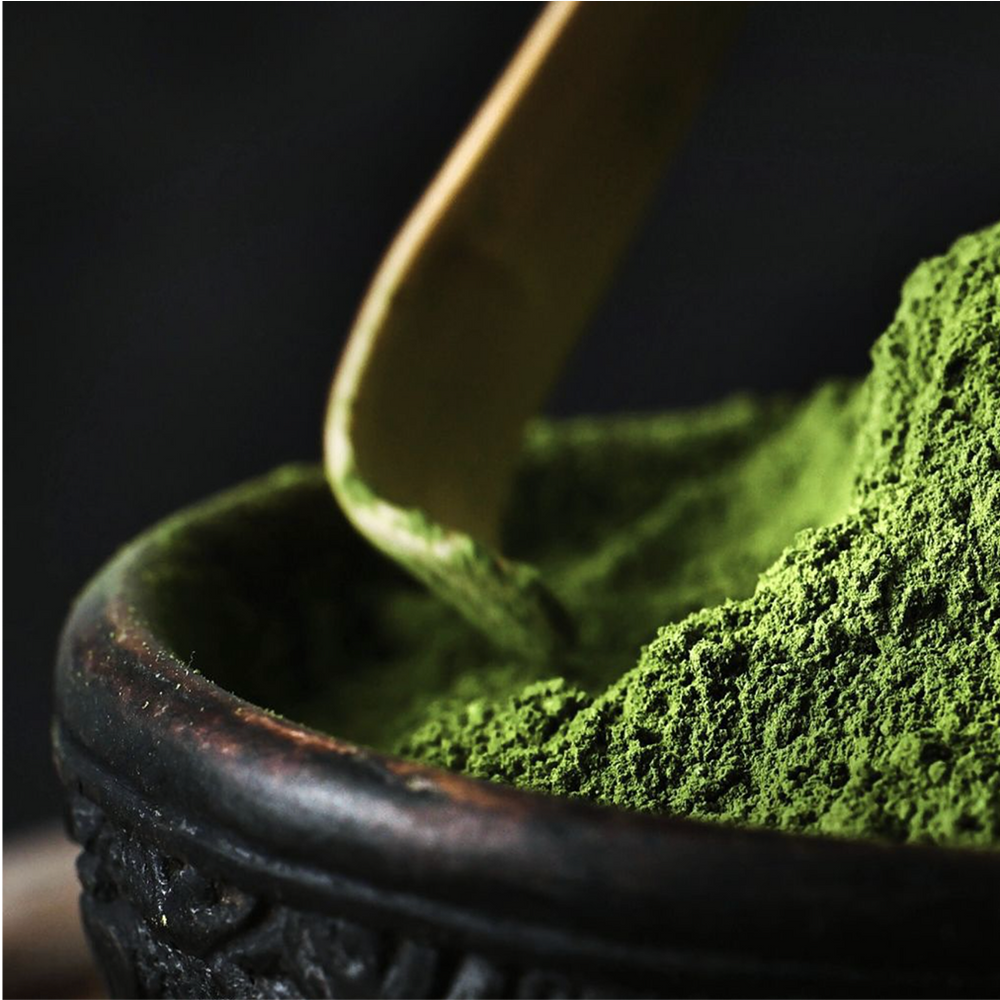
Matcha's vivid, almost electric green is one of the first things people notice about it. It looks quite unlike any other tea or powdered drink, which naturally raises the question of where that colour actually comes from.
The answer involves both plant biology and a cultivation technique that has been practised in Japan for centuries. Understanding the science does something useful beyond satisfying curiosity: it also gives you a practical tool for evaluating the quality of any matcha you buy. The colour is not incidental. It is one of the most reliable signals of how a matcha was grown, when it was milled, and whether what you are looking at is worth your time.
Ready to taste the difference that proper shade-growing makes? Explore JING's matcha collection, sourced from named gardens in Kagoshima, Japan.
The science: chlorophyll and why plants are green
The green colour in matcha comes from chlorophyll, the pigment found in all photosynthetic plants. Chlorophyll absorbs red and blue wavelengths of light and reflects green, which is the wavelength our eyes perceive. It is, in the most literal sense, the reason most of the living world looks green to us.
All tea plants contain chlorophyll naturally, but the way matcha is grown causes the plant to produce significantly more of it than a standard unshaded tea plant would. This is why matcha looks so much more intensely green than a steeped green tea or any other tea in the cup: it is not just that the whole leaf is consumed rather than an infusion, it is that the leaf itself contains an unusually high concentration of the pigment.
Chlorophyll is also directly connected to other compounds in the leaf. When chlorophyll levels are high, L-theanine and certain antioxidants tend to be elevated too. This means the vivid green colour of a well-made matcha is also a signal of its nutritional quality, not just its growing method.
For more on those compounds, our guide to matcha tea antioxidants covers what they are and why they matter.
Why shade-growing makes matcha so much greener
The key to matcha's intensity of colour is the shade-growing process. Tea plants destined for matcha are covered with bamboo screens or black netting for around three to four weeks before harvest, blocking the majority of direct sunlight. The plant responds by producing more chlorophyll in an attempt to continue photosynthesising with the limited light available. It is a stress response, and the result is a leaf far more densely pigmented than one grown in full sun.
This process, known as tana in Japanese, is one of the defining steps in authentic matcha production. It is also what distinguishes matcha, and its close relative gyokuro, from unshaded green teas like sencha, which are grown in full sunlight and as a result have a noticeably lighter, more yellow-green colour. The difference is immediately apparent when you place the two side by side.
The same shade-growing process that intensifies chlorophyll also increases L-theanine and softens bitterness, giving ceremonial matcha its characteristic sweetness and umami depth alongside its vivid colour. The colour and the flavour are products of the same decision in the field.
Why JING matcha is milled to order
Chlorophyll is a fragile compound. It degrades when exposed to light, heat, oxygen, and moisture, and once matcha has been stone-milled, the dramatically increased surface area of the powder makes it particularly vulnerable to oxidation. Freshness at the point of milling matters significantly for both colour and nutritional quality, which is why how a matcha is processed and stored after milling is just as important as how it was grown.
JING's Organic Ceremonial Matcha is stone-milled to order and packed immediately into airtight tins, which means the vivid green you see when you open the tin is as close as possible to the colour of the freshly milled leaf, without weeks or months of degradation in a warehouse. Shade-grown Okumidori leaves from volcanic soil in Kirishima, Kagoshima, milled and packed at peak freshness: that is what the colour in the tin represents.
What matcha colour tells you about quality
Colour is one of the most reliable quick indicators of matcha quality available to a buyer, because it reflects both how the leaf was grown and how it has been processed and stored since milling. The table below sets out what different shades typically signal.
|
Colour |
What it signals |
Likely cause |
|---|---|---|
|
Vivid, luminous green |
High chlorophyll, first harvest, well-shaded |
Ceremonial grade, freshly milled, properly stored |
|
Bright but slightly muted green |
Good quality, some age or lighter shading |
Premium or high culinary grade |
|
Olive or yellow-green |
Lower chlorophyll, later harvest or unshaded |
Culinary grade or aged/poorly stored matcha |
|
Dull brown-green |
Significant oxidation or degradation |
Old stock, poor storage, or artificial colouring removed |
A vivid, almost electric green is a strong signal of a first-harvest, well-shaded, recently milled powder. A dull, olive, or yellowish matcha is often the result of one of three things: unshaded or minimally shaded growing, which is common in culinary grade; a late harvest where leaves are more mature and less chlorophyll-rich; or degradation from poor storage or prolonged time since milling. Any of these will also affect flavour and nutritional quality, so the colour is not merely cosmetic.
For a full breakdown of how grade affects colour, flavour and nutritional content, our guide to matcha grades and our comparison of ceremonial vs culinary matcha cover both in detail.
How to keep matcha green after you open it
Once the tin is opened, matcha begins to oxidise slowly and the vivid green will gradually fade to a more muted tone if the powder is exposed to light, air, heat, or moisture. The best way to preserve the colour and flavour is to store matcha in an airtight container away from direct light, ideally in the fridge.
This is also why buying matcha in smaller quantities and using it within four to six weeks of opening tends to produce a better experience than buying in bulk. The colour and flavour are most vivid when the powder is fresh, and that freshness is worth protecting.
JING's approach of stone-milling to order and packing into airtight tins means the matcha arrives in its freshest possible state. To experience what genuinely fresh, vivid ceremonial matcha looks and tastes like, explore JING's matcha collection.
Discover JING's shade-grown matcha
Matcha is green because of chlorophyll. Shade-growing dramatically increases chlorophyll production by inducing a specific stress response in the plant. The intensity of colour is a direct and reliable signal of growing method, harvest quality, and freshness at the point of milling and purchase.
Every tin of JING matcha carries the name of the garden it came from, the cultivar, and the region, because the colour and quality in the cup are the product of specific people, places, and practices rather than generic supply chains.
If you want to see and taste the difference for yourself, start with JING's Organic Ceremonial Matcha, shade-grown in Kirishima and milled to order.
Frequently asked questions
Why is matcha green?
Matcha is green because of chlorophyll, the pigment present in all photosynthetic plants. Matcha contains particularly high levels of chlorophyll because the tea plants are shade-grown for three to four weeks before harvest, which causes the plant to produce more chlorophyll in response to reduced sunlight. The whole leaf is then ground into a powder and consumed rather than steeped and discarded, so all of that chlorophyll ends up in your cup.
Why is matcha greener than other teas?
Most teas are made from unshaded leaves and are consumed as an infusion rather than a whole-leaf powder. The shade-growing process used to produce authentic matcha dramatically increases chlorophyll content above that found in a standard green tea plant, and consuming the whole ground leaf rather than just the steeped extract means all of that colour, and the compounds associated with it, are present in every sip.
Why does some matcha look more yellow than green?
A yellow or olive-toned matcha is typically a sign of lower chlorophyll content, which can result from unshaded or minimally shaded growing, a later harvest using more mature leaves, or degradation from poor storage or extended time since milling. Chlorophyll breaks down when exposed to light, heat, oxygen, and moisture, so a dull colour often signals age or improper storage as much as growing method.
Does the colour of matcha affect the taste?
Yes. The same shade-growing process that produces vivid green colour also increases L-theanine and softens the bitterness of the leaf, so a more intensely green matcha is generally also sweeter, more umami-forward, and less harsh in flavour. A dull, yellower matcha will often taste flatter, more bitter, and less complex than a ceremonial grade powder with strong, vivid colour.
Why does matcha fade over time?
Chlorophyll is sensitive to light, heat, oxygen, and moisture, and begins to break down once the matcha has been milled and exposed to air. Freshly milled matcha is more vibrantly green than matcha that has been sitting in storage, which is why proper airtight storage in a cool, dark place helps preserve both the colour and the flavour for as long as possible after opening.