A Beginner’s Guide to the Different Matcha Grades
Matcha has moved from quiet tea rooms in Japan to home kitchens and cafés around the world. It’s vivid, energising and unlike any other green tea – you’re drinking the whole leaf, finely ground, rather than a simple infusion.
But as soon as you start looking for matcha, you’ll see labels like “ceremonial”, “culinary” and “premium”. Prices vary wildly. Colours range from luminous green to dusty olive. Not all matcha is the same – and understanding the different matcha grades is the key to finding one you’ll love.
In this guide, we’ll explain the main grades of matcha, how they differ in flavour, colour and health benefits, and how to choose the right one for your rituals, recipes and lifestyle. If you’d like to explore matcha’s wider benefits as you read, you can dip into our article on the top benefits of matcha or discover more about how matcha is made.
What are the Different Grades of Matcha?
When producers talk about “matcha grades”, they’re describing a spectrum of quality, flavour and intended use. Grading is not yet strictly regulated, but it generally reflects a few core factors:
- Harvest time – early spring vs later pickings.
- Leaf selection – youngest top leaves vs more mature leaves and stems.
- Shading and processing – how long the plants are shaded and how carefully they’re steamed, dried and stone-ground.
To make things easier for drinkers, most matcha is described in three broad categories:
- Ceremonial matcha – the highest grade, designed for drinking neat.
- Culinary matcha – robust and versatile, made for recipes and mixed drinks.
- Premium matcha – a middle ground between the two, ideal for everyday bowls and lattes.
Let’s look at each in more detail.
Ceremonial Matcha
Ceremonial grade matcha is matcha at its most refined.
Traditionally used in Japanese tea ceremonies, it’s crafted from the youngest, most tender leaves from the first spring harvest. The plants are shaded for several weeks before picking, which boosts chlorophyll and amino acids like L-theanine. After harvesting, the leaves are steamed, dried, destemmed and stone-ground slowly into an ultra-fine, bright green powder.
You can expect:
- Flavour: Naturally sweet, rich in umami, with no harsh bitterness when prepared correctly.
- Colour: Vivid, luminous green.
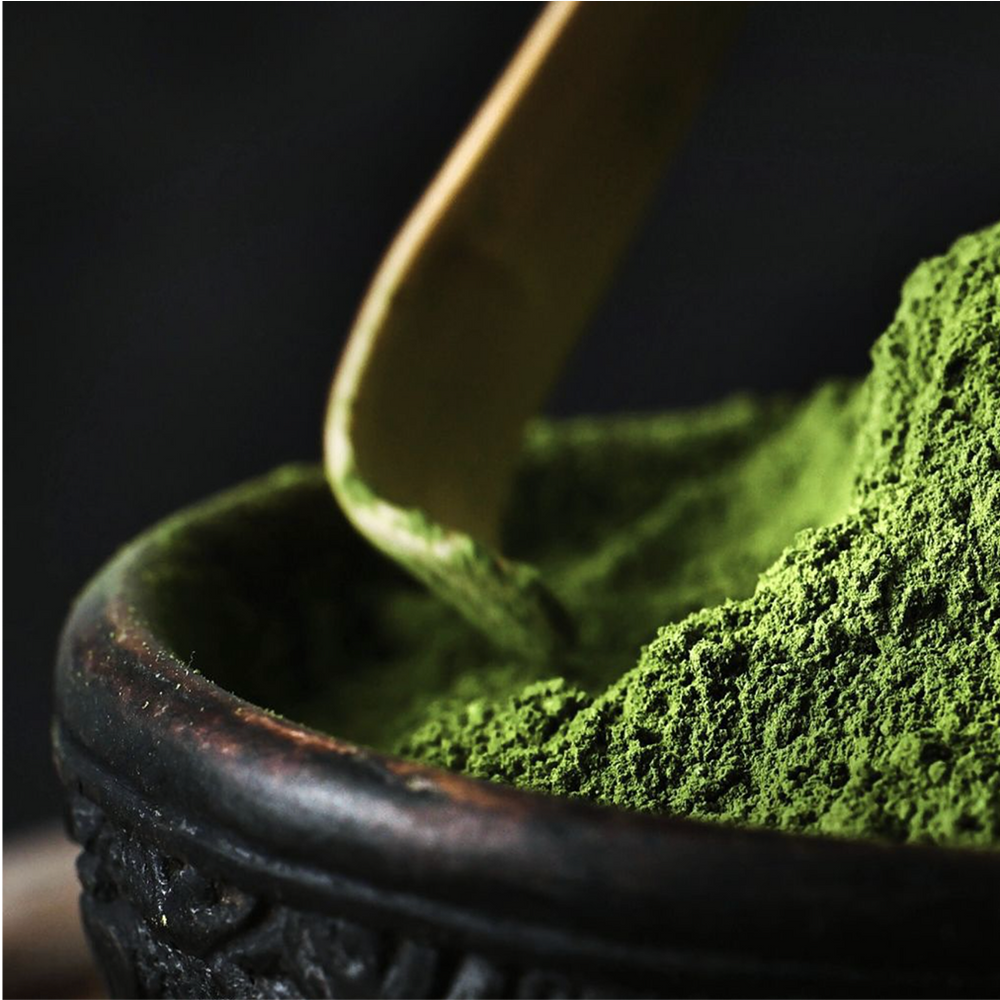
- Texture: As fine as talc; when whisked, it forms a smooth, creamy froth.
Ceremonial matcha is intended to be whisked with hot water (around 70–80°C) and enjoyed on its own, without milk or sweeteners. It’s the matcha to choose when you want to taste the leaf’s full character and enjoy a traditional, mindful tea experience.
If you’re ready to taste ceremonial matcha at its best, explore our Ceremonial Matcha.
Culinary Matcha
Culinary matcha is made with the kitchen in mind.
Rather than just the youngest buds, it typically includes more mature leaves and sometimes later harvests. These leaves develop a bolder, slightly more astringent profile that stands up well when combined with other ingredients or exposed to heat.
Culinary matcha is:
- Flavour: Stronger, more robust and often a little more bitter – ideal for blending into lattes, cakes or ice creams.
- Colour: Usually a softer or more muted green than ceremonial.
- Texture: Still finely ground, but often a fraction coarser than the very top ceremonial grades.
Where ceremonial matcha is the soloist, culinary matcha is the ensemble player – designed to keep its character when mixed with flour, sugar, fats and milk. It’s the ideal choice for recipes, matcha lattes and creative drinks where matcha is an ingredient rather than the entire focus.
Premium Matcha
Premium matcha sits between ceremonial and culinary on the spectrum.
You can think of it as:
- Higher quality and more vivid than most culinary grades.
- Slightly less delicate and rarefied than top ceremonial batches.
Premium matcha is:
- Flavour: Smooth and enjoyable enough to drink neat, with some umami and sweetness, but with enough punch to use in lattes and smoothies.
- Colour: Bright, fresh green – not quite as neon-bright as the very top ceremonial matcha, but clearly vibrant.
- Use: Excellent for daily bowls, iced matcha, matcha lattes and “functional” drinks like shakes or protein smoothies.
If you love the idea of drinking matcha every day and occasionally whisking it into a latte, a high-quality premium-style matcha offers a great balance of flavour, flexibility and value.
What is the Difference Between Matcha Grades?
Beyond names on a label, the differences between matcha grades show up in three main ways: how they taste, how they’re used and how they support your wellbeing.
Flavour Differences
- Ceremonial matcha: High levels of L-theanine and careful shading create a naturally sweet, deeply umami cup with very low bitterness. Think steamed greens, soft sweetness and a long, satisfying finish.
- Premium matcha: Still smooth and pleasant, but often with a touch more grassiness or light astringency. Ideal if you like a slightly bolder character.
- Culinary matcha: Designed to be tasted through milk, sugar and other ingredients. It’s intentionally stronger, more assertive and can taste more bitter or tannic if you drink it neat.
Shading time, harvest and leaf selection all influence L-theanine levels and chlorophyll content, which in turn shape sweetness, depth and complexity. In essence: the more care and earlier leaf used, the more rounded and umami the flavour.
Usage Differences
Each grade has a “best use”:
- Ceremonial matcha: Whisk with water only and drink pure. It’s the right choice for traditional preparation, meditative rituals and moments when you want to savour flavour and aroma.
- Premium matcha: Perfectly acceptable both as a neat drink and in modern serves such as iced matcha, matcha lattes or smoothies. A versatile daily driver.
- Culinary matcha: Best kept for recipes – cakes, biscuits, energy balls, pancakes, ice cream, sauces and vibrant matcha lattes.
Technically, you can do anything with any grade, but matching the grade to the use ensures you get the best possible taste for the money you’re spending.
Health & Benefits Differences
All authentic matcha is made from powdered green tea leaves, so all grades offer:
- Antioxidants like catechins (especially EGCG).
- Chlorophyll from shade-growing.
- Caffeine and L-theanine for calm alertness.
However, the concentration of these compounds can vary:
- Higher grades (ceremonial and top premium) usually come from the first spring harvest and receive the longest, most consistent shading, leading to elevated levels of L-theanine, chlorophyll and certain antioxidants.
- Lower grades may use later harvests or more mature leaves, which can still be nutritious but may have slightly lower concentrations of these compounds.
If you’re particularly focused on wellness and mental clarity, it’s worth pairing this guide with our deep dives into the benefits of matcha and how matcha is made.
What Matcha Grade Is Right for Me?
A simple way to choose is to start with how you want to drink matcha:
Ask yourself:
-
Do I want to drink matcha neat, just with water?
- Start with ceremonial or a high-quality premium.
-
Am I mostly making matcha lattes, smoothies or baking recipes?
- A good culinary or mid-range matcha will serve you well.
-
Do I want one matcha that can do a bit of everything?
- Look for a premium-style matcha with good colour and a smooth, balanced flavour.
Lifestyle also plays a role:
- If you love rituals, tasting notes and quiet morning moments, investing in ceremonial matcha makes sense.
- If you’re more about functional energy and creative drinks, a premium or culinary-grade powder is a great place to start.
Ceremonial, Culinary & Premium Matcha from JING Tea
For 20 years, JING has been working directly with tea masters across Asia to source single-garden teas that express their origins with exceptional clarity. Our approach to matcha is no different.
We carefully select shaded, stone-ground matcha from renowned Japanese producers, focusing on leaf quality, craft and flavour rather than chasing labels alone.
- Explore our Ceremonial Matcha when you’re ready to experience matcha in its purest form.
- Discover our Matcha Latte for a modern, creamy way to enjoy matcha’s character.
- Learn more about matcha’s benefits in our guide to the top 10 benefits of matcha and dive deeper into the craft in how matcha is made or green tea vs matcha.
Whichever grade you choose, you’re not just buying a powder – you’re inviting in a new daily ritual, a different kind of focus, and a taste of centuries of Japanese tea culture.