Matcha tea antioxidants: what they are and why matcha has so many
Matcha's reputation as an antioxidant-rich drink is well-earned, but the word "antioxidant" gets used so often in wellness content that it has lost much of its meaning. This article exists to give it back.
What follows is an explanation of what antioxidants actually are, which specific ones are found in matcha, why matcha contains more of them than most other teas or drinks, and what role the quality and preparation of the matcha play in how much you actually absorb. The science is genuinely interesting, and the detail matters more than most matcha writing lets on.
If you are ready to experience the difference that quality makes, explore JING's matcha collection, sourced directly from named gardens in Japan.
What are antioxidants and why do they matter?
Antioxidants are compounds that neutralise free radicals in the body. Free radicals are unstable molecules produced naturally by metabolic processes, as well as by external factors like pollution, UV exposure, and smoking. When free radicals accumulate faster than the body can neutralise them, the result is oxidative stress, which is linked to cellular damage and a range of chronic health conditions.
Antioxidants are found in a wide range of plant foods and drinks, and the reason matcha attracts particular attention is the concentration and specific type of antioxidants it contains, rather than simply the fact that it contains them at all.
Not all antioxidants are the same. The specific compounds in matcha, particularly a group called catechins, have been more extensively studied than most, which is why the science behind matcha's antioxidant properties is more developed than for many other foods that carry a similar reputation.
What antioxidants are in matcha?
Matcha is unusually rich in a specific family of plant compounds, and understanding which ones and why they are present in such concentration helps explain why the origin and grade of the matcha you choose genuinely matters.
EGCG: the antioxidant matcha is most known for
EGCG, or epigallocatechin gallate, is the most abundant and most studied catechin in matcha. It belongs to a broader family of plant compounds called polyphenols, which are found across a wide range of fruits, vegetables, and teas, but are particularly concentrated in shade-grown green tea leaves.
Matcha contains significantly more EGCG than a standard cup of steeped green tea because of how it is prepared. When you drink matcha, you consume the whole ground leaf rather than a water infusion, meaning none of the catechins is left behind in the discarded leaves or tea bag. Every compound that the leaf contains ends up in your cup.
For a broader comparison of how matcha and green tea differ in preparation and nutritional expression, our guide to green tea vs matcha covers the key differences clearly.
Chlorophyll and why shade-growing matters
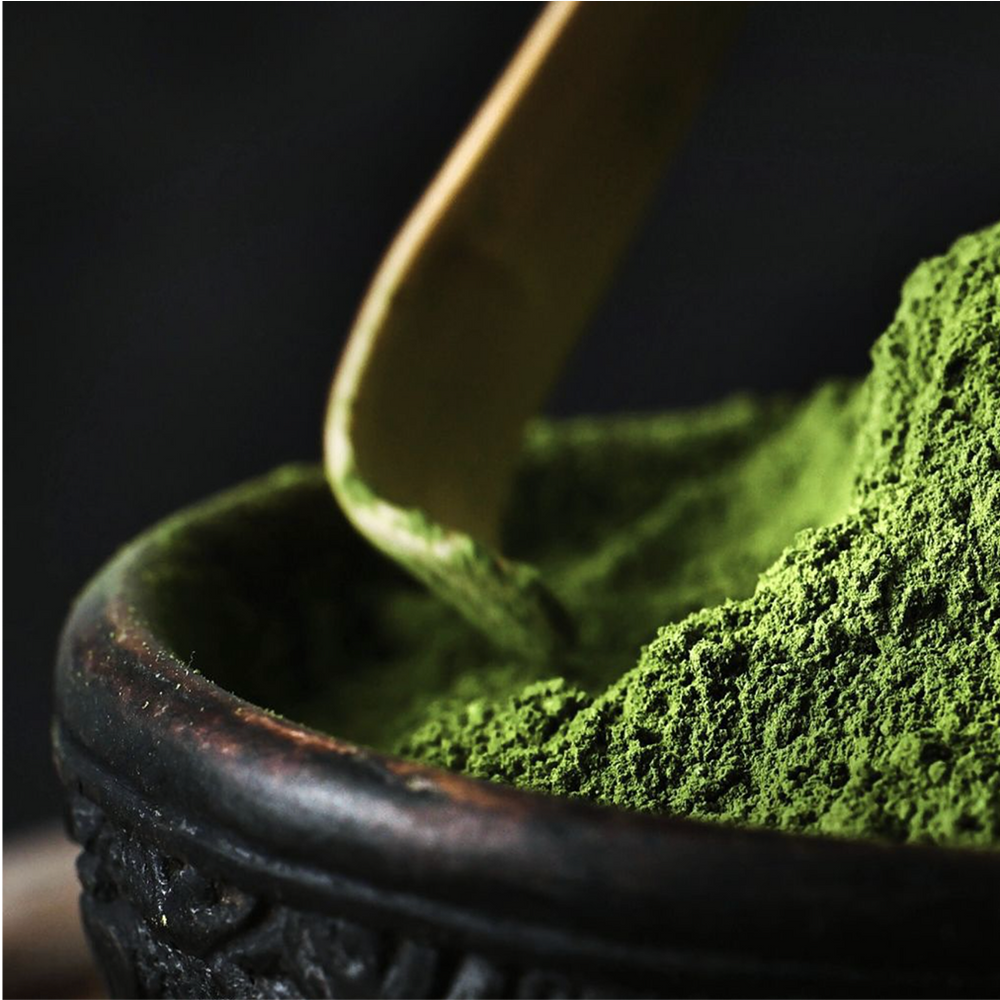
The vivid green colour of high-quality matcha is not just aesthetic: it is a direct indicator of chlorophyll content. Chlorophyll increases when tea plants are deprived of direct sunlight in the weeks before harvest, because the plant produces more of it in an attempt to maximise photosynthesis with the limited light available.
The same shade-growing process that increases chlorophyll also increases L-theanine and catechin levels in the leaf. This means that the shade-growing method used to produce authentic Japanese matcha has a direct and measurable impact on the antioxidant content of the final powder, which is one reason why the origin and grade of matcha matter from a nutritional standpoint as much as from a flavour one.
Our guide to ceremonial vs culinary matcha explains how growing method and harvest timing affect both taste and nutritional quality.
How does matcha compare to other antioxidant drinks?
Matcha is far from the only antioxidant-rich drink, but what distinguishes it is the specific combination of compounds it contains and the way in which it is consumed. The table below puts the main comparators in context.
|
Drink |
Key antioxidants |
Notes |
|---|---|---|
|
Matcha |
EGCG, catechins, chlorophyll, L-theanine |
Whole leaf consumed, highest catechin density |
|
Green tea (steeped) |
EGCG, catechins |
Lower than matcha as leaf is discarded |
|
Black tea |
Theaflavins, thearubigins |
Oxidation process reduces catechin content |
|
Coffee |
Chlorogenic acids |
Different antioxidant family, no catechins |
|
Blueberries |
Anthocyanins |
Different family, often cited for comparison |
While many foods and drinks contain antioxidants, matcha's particular combination of EGCG concentration, whole-leaf consumption, and shade-growing makes it one of the most antioxidant-dense drinks available. The catechins in matcha are distinct from the antioxidant compounds found in coffee or fruit-based drinks, so comparisons are often more complicated than they first appear.
Comparisons between matcha and other antioxidant drinks are frequently complicated by the fact that different antioxidants work through different mechanisms. The goal is not to identify a single best antioxidant source but to understand what each drink actually contributes.
For readers who are weighing matcha against coffee as a daily drink, our guide to matcha caffeine and L-theanine covers how the two drinks compare beyond just antioxidant content.
Does matcha quality affect antioxidant content?
Not all matcha is the same. The antioxidant content of the powder you buy is directly influenced by the growing conditions, harvest timing, and processing method used to produce it. Shade-grown first-harvest ceremonial-grade matcha consistently delivers higher concentrations of catechins and L-theanine than later-harvest culinary grades, because the leaves are younger, more carefully shaded, and picked at the point of maximum compound accumulation.
Preparation also matters. Using water that is too hot, above 80 degrees Celsius, can degrade delicate catechins in the cup. Storing matcha in warm, light, or humid conditions will reduce its antioxidant potency over time. This is why JING mills its matcha to order and packs it immediately into airtight tins, ensuring the powder reaches you at the point of maximum freshness.
JING's Organic Ceremonial Matcha is stone-milled to order from shade-grown Okumidori leaves in Kirishima, Kagoshima, and packed immediately after milling so you receive it at its most potent and freshest. For more on how grade affects what you get in the cup, see our guide to matcha grades.
Choose JING for single-origin ceremonial matcha
Antioxidants are compounds that help the body manage oxidative stress. Matcha is particularly rich in catechins, especially EGCG, and in chlorophyll, because of how the leaf is grown and consumed. The quality of the matcha you choose has a real bearing on how much of those compounds actually reach your cup.
Single-garden sourcing, shade-grown leaves, stone-milled to order, packed immediately: these are not marketing points. They are the practical conditions that determine whether the antioxidant potential of the leaf is preserved or squandered before it reaches you.
If you want to experience what a genuinely high-quality, antioxidant-rich matcha tastes like, explore JING's matcha collection and start with the ceremonial grade.
Frequently asked questions
What antioxidants are in matcha?
Matcha contains several powerful antioxidants, with EGCG (epigallocatechin gallate) being the most abundant and most studied. Other catechins present include EGC, ECG, and EC, all of which belong to the polyphenol family. Matcha also contains chlorophyll, which is elevated by the shade-growing process, and L-theanine, an amino acid that works alongside the catechins and caffeine to support calm, focused energy.
Is matcha a good antioxidant drink?
Matcha is one of the most antioxidant-dense drinks available, primarily because you consume the whole ground leaf rather than a steeped infusion. This means the catechins that would otherwise remain in the discarded leaf or tea bag are all present in your cup. The shade-growing method used to produce authentic Japanese matcha also increases catechin and chlorophyll levels above those found in unshaded green tea.
Does matcha have more antioxidants than green tea?
Yes, matcha generally contains significantly more antioxidants per serving than a standard cup of steeped green tea. This is partly because matcha is made from shade-grown leaves that are higher in catechins to begin with, and partly because the whole leaf is consumed rather than just an aqueous extract. Green tea vs matcha covers this comparison in more depth.
Does matcha grade affect its antioxidant content?
Yes. Higher-grade ceremonial matcha, made from first-harvest shade-grown leaves, tends to have higher concentrations of catechins, L-theanine, and chlorophyll than lower-grade culinary powders made from later harvests or less carefully shaded plants. If antioxidant content is a priority, choosing a ceremonial grade from a named, reputable source makes a genuine difference.
How should I prepare matcha to preserve its antioxidants?
Use water at around 70 to 80 degrees Celsius rather than boiling water, as high temperatures can degrade delicate catechins. Whisk immediately after combining water and powder. Store your matcha in a cool, dark, airtight container, ideally in the fridge once opened, and use it within a few weeks of opening for the best nutritional and flavour quality.